
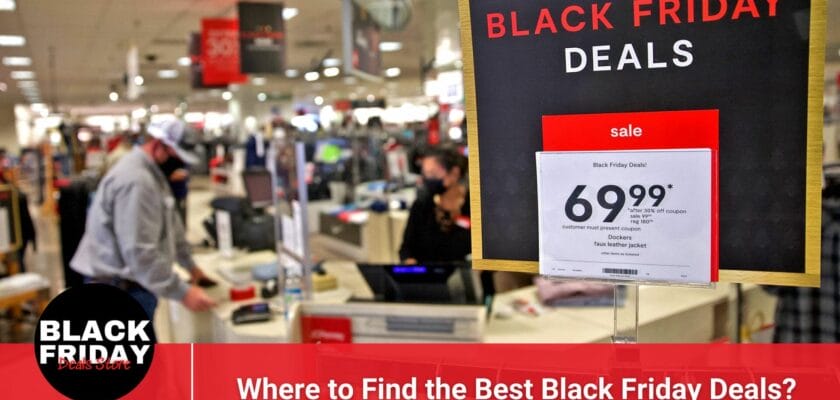
In short: Find the best Black Friday deals by comparing major retailers, manufacturer websites, warehouse clubs, local stores, and reputable deal trackers.
Check the complete price history, return policy, shipping cost, stock status, and product specifications before buying.
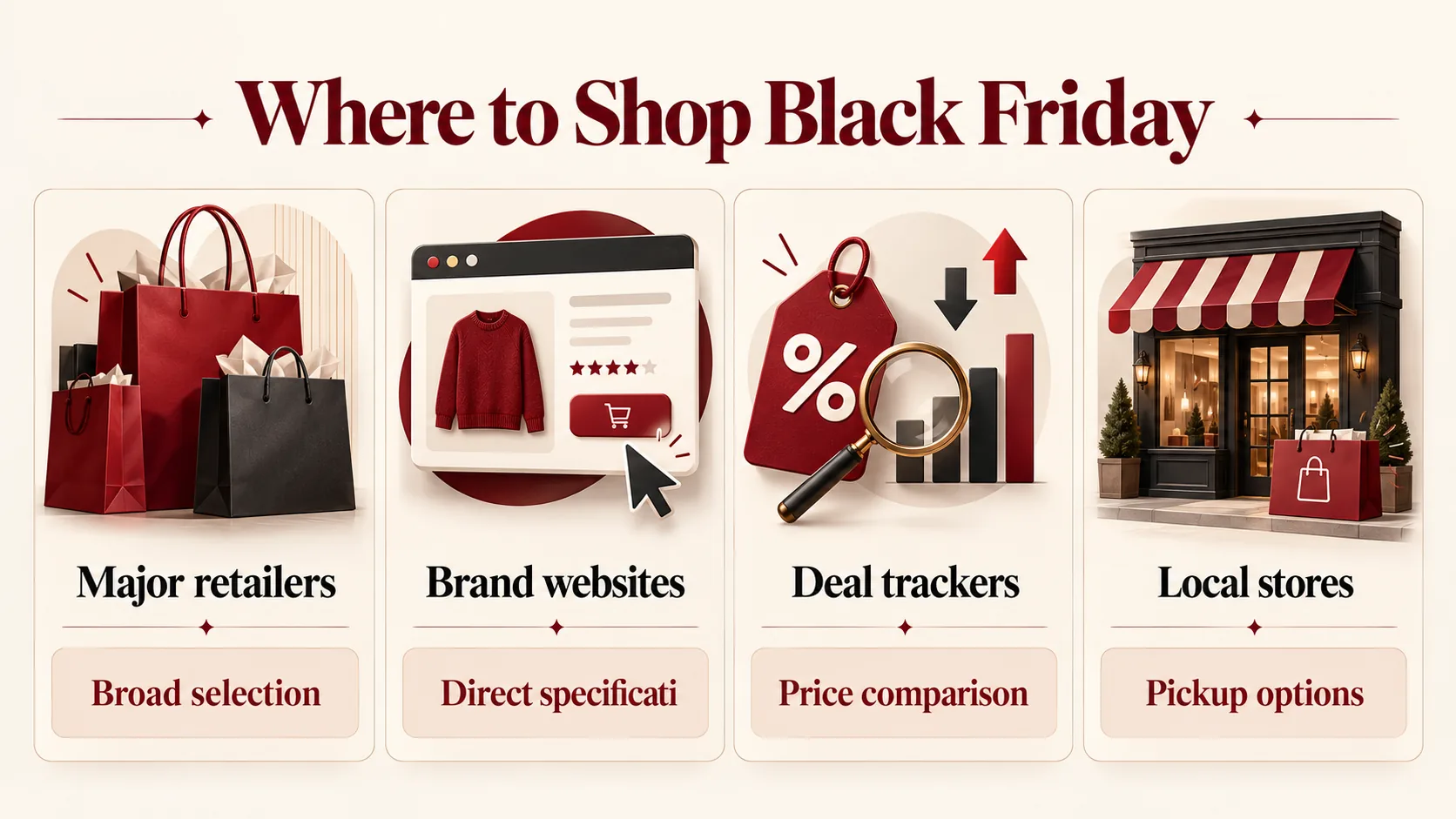
The best Black Friday deals are rarely concentrated in one store.
Major retailers compete on popular electronics, home goods, toys, appliances, clothing, and subscriptions, while manufacturer sites may offer useful bundles or exclusive colors.
Deal trackers help you compare listings, but the lowest displayed price is not always the lowest total cost.
Where you shop affects more than the advertised offer.
A retailer’s return period, shipping rules, warranty handling, stock accuracy, and pickup options can determine whether a deal remains valuable after checkout.
Start with a short list of needed products, then compare trustworthy sources instead of browsing every promotion.
Start With Major Retailers
Large retailers are the first place to check because they carry broad product ranges and publish many Black Friday promotions.
Their sites often group offers by department, making it easier to compare televisions, laptops, kitchen equipment, tools, toys, apparel, and personal care products.
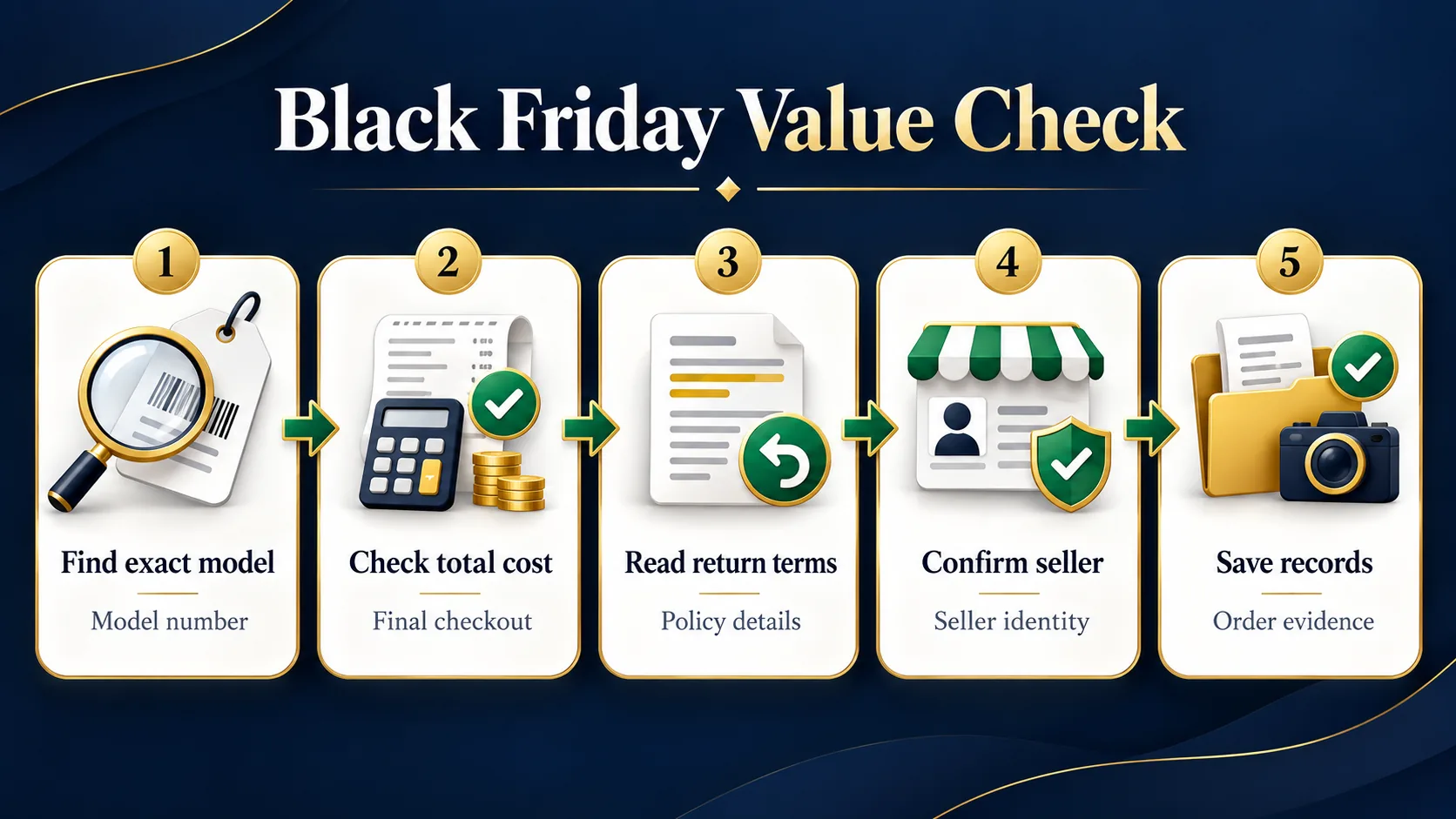
Search results can still mix current models with older inventory, so confirm the exact model number before adding an item to your cart.
Use retailer apps or email alerts to learn when a promotion opens, especially when an offer has limited inventory. Some stores release deals in waves rather than all at once.
A product page may show a sale window, store pickup status, shipping estimate, or membership requirement.
Read each condition because an advertised offer may apply only to selected colors, sizes, configurations, or quantities.
Major retailers can be useful when you need flexible fulfillment. Compare home delivery, curbside pickup, in-store pickup, and ship-to-store options before deciding.
Pickup can help avoid shipping charges, but inventory may change between the product page and payment screen.
If a retailer offers price matching, read the qualifying rules and exclusions before assuming another listing will lower your final total.
Retailer convenience does not replace product research. Check the manufacturer’s specifications, included accessories, compatibility requirements, and warranty terms.
Reviews can reveal recurring concerns, but separate comments about the exact model from comments about a similar product.
Save the product page, order details, and policy information because promotion pages can change after the event.
We cover the mechanics in more depth in How Black Friday works.
Review consumer buying guidance before comparing promotional claims, subscriptions, and seller practices.
Check Manufacturer Websites
Manufacturer websites deserve attention when a product is sold through several stores.
The brand page can confirm the official model number, technical specifications, compatible accessories, warranty coverage, and recommended retail information.
This helps you recognize retailer listings that use shortened names or confusing bundles. Compare the exact configuration rather than comparing two products by brand and category alone.
Brand sites sometimes offer direct promotions, accessory bundles, trade-in credits, free shipping, or extended support.
These benefits can matter when a retailer’s headline offer excludes necessary accessories or uses a less capable configuration.
Read the terms for eligibility, timing, product condition, and redemption. A bundle is useful only when you would otherwise buy every included item.
Direct purchases may have different return and repair procedures from purchases made through a retailer.
Check who handles defective items, whether return shipping is covered, and how long refunds take. Some brands limit returns for personalized, opened, clearance, or activated products.
Review the warranty language before buying expensive electronics, appliances, tools, or connected devices.
A manufacturer site is also a useful verification source when a deal listing looks unusually attractive.
Confirm that the product exists, belongs to the current lineup, and includes the expected charger, remote, software, or mounting hardware.
If the product page redirects to an unfamiliar seller, inspect the seller name and fulfillment details before treating the listing as a direct brand offer.
Use product standards information to understand why specifications and safety details matter.
Use Deal Trackers Carefully
Deal trackers can save research time by collecting promotions from many stores, but they are comparison tools rather than final authorities.
A listing may expire, change price, sell out, or redirect to a different seller.
Open the retailer page before purchasing and confirm the product, seller, shipping charge, stock status, and applicable conditions.
Look for trackers that show price history, model numbers, inventory notes, and deal context. A price history can reveal whether an offer is genuinely unusual or simply a recurring promotion.
It cannot guarantee future availability or prove that a product is the right choice. Use it as one signal alongside specifications, total cost, and your planned purchase.
Read the distinction between a deal editor’s recommendation, a user-submitted listing, and a sponsored placement. Each type can have different review standards and commercial relationships.
Do not assume that a highlighted listing is the best option for your needs. Search the exact model across several trusted retailers, then compare the complete checkout total.
Set alerts around specific products instead of broad categories when possible. Narrow alerts reduce noise and make it easier to respond when a suitable offer appears.
Keep a backup retailer in mind because inventory can disappear quickly.
Avoid rushing solely because a countdown timer is visible, since urgency messages do not replace product, seller, or policy checks.
Check home energy guidance when comparing appliances, heating equipment, and household electronics.
Compare Local Shopping Options
Local stores can provide Black Friday value that national websites do not show clearly.
Grocery stores, warehouse clubs, independent retailers, outlet centers, and regional chains may offer member benefits, bundled services, or convenient pickup.
Check each store’s circular, app, loyalty program, and local inventory page. Availability can differ substantially between nearby locations.
Warehouse clubs may require membership, but membership benefits can include shipping, extended warranties, installation services, or longer return rules on selected products.
Read the current terms before assigning value to those benefits. A membership is not automatically worthwhile if you would not use the store after the seasonal purchase.
Include any membership fee in your comparison.
Local pickup lets you inspect packaging, confirm the correct item, and avoid delivery delays, but it does not remove the need for research.
Ask whether the displayed item is the same model as the online listing. Check for open-box labels, missing accessories, clearance restrictions, and store-specific return rules.
Keep the receipt and verify the product before leaving when practical.
Independent retailers may offer knowledgeable service, installation, repair support, or flexible ordering.
Their selection may be smaller, so compare model specifications rather than assuming a local offer is equivalent to a national one.
Confirm warranty responsibility and delivery terms in writing for large appliances, furniture, fitness equipment, and other products that require setup or transport.
Use shipping service information to compare delivery options and plan for seasonal delays.
Verify Total Deal Value
The best deal is the product that meets your needs at the lowest reliable total cost.
Add shipping, delivery, installation, required accessories, membership fees, taxes, and disposal charges where applicable.
A lower item price can lose its advantage after mandatory extras appear at checkout. Compare the same configuration and service level across every seller.
Check the return policy before paying, especially for clothing, mattresses, furniture, large appliances, beauty devices, and opened electronics.
Note the return deadline, restocking charge, shipping responsibility, exchange process, and exclusions. A short or restrictive policy can make an uncertain purchase more expensive.
Save a copy of the terms shown when you order.
Review payment conditions with care. Some offers require a store card, loyalty account, coupon, automatic renewal, or subscription. Confirm when a membership or trial ends and how cancellation works.
Financing can change the total amount paid, while rewards may have expiration dates or category restrictions. Treat promotional credit as conditional value, not immediate savings.
Before checkout, compare the product name, model number, quantity, seller, delivery method, and final total. Remove optional add-ons you did not request.
After ordering, keep the confirmation, receipt, policy link, and tracking details in one place.
If the retailer changes the order or substitutes an item, contact support promptly and document the resolution.
Before you buy: your questions
Where should I look first for Black Friday deals?
Start with major retailers for broad selection, then check the manufacturer website for specifications and direct offers. Use a reputable deal tracker to compare timing and price history.
Finish by checking local stores, warehouse clubs, shipping costs, return rules, and the exact product configuration before buying.
Are Black Friday deals better online or in stores?
Neither channel is always better. Online shopping provides wider selection and easier comparison, while stores can offer pickup, local inventory, and service benefits.
Compare the complete total, fulfillment speed, stock status, and return policy. Choose the channel that gives you the strongest combination of value and convenience.
How can I tell whether a deal is genuine?
Check the exact model number against the manufacturer’s website and compare the current listing with reliable price history. Review shipping, taxes, accessories, seller identity, and return terms.
Avoid judging value from a claimed discount alone. A genuine bargain still needs to match your requirements and total budget.
Should I buy from the manufacturer or a retailer?
Buy from the source that offers the better complete package for the same configuration.
Manufacturer sites may provide direct warranty support or useful bundles, while retailers may offer pickup, easier returns, or faster delivery.
Confirm who handles defects and returns before choosing, especially for expensive or complicated products.
Do deal websites show every Black Friday offer?
No. Deal websites collect many promotions, but they can miss local offers, member-only prices, manufacturer promotions, and short inventory events. They may also list expired or changing offers.
Use them for discovery and comparison, then verify the live retailer page, seller, model, stock, and checkout conditions.
Are warehouse club Black Friday deals worth membership?
They can be worthwhile when you already shop there or need included services such as delivery, installation, or extended support. Compare the membership cost with the benefits you will actually use.
Check product selection, return rules, warranty handling, and total checkout cost instead of focusing on the displayed item price.
What should I compare besides the sale price?
Compare the exact model, included accessories, shipping, taxes, installation, membership requirements, warranty, return deadline, restocking charges, and seller identity.
Also consider delivery timing and pickup availability. These details determine the real cost and risk of a purchase, particularly for large, fragile, personalized, or technically complex items.
How early should I start looking for Black Friday deals?
Start when you know what you need and can identify acceptable models. Retailers often spread promotions across several waves, while some offers appear before the main shopping period.
Early research gives you time to record normal prices, learn specifications, compare policies, and avoid buying an unsuitable product under pressure.
What should I do after finding a Black Friday deal?
Open the live product page and verify the model, seller, inventory, final total, delivery method, and return terms. Save the confirmation and policy information after checkout.
When the order arrives, compare the item with the listing and keep all packaging and records until you are satisfied with the purchase.
More Black Friday and Cyber Monday guides
Planning the rest of your Black Friday? These cover the same shopping window:

