

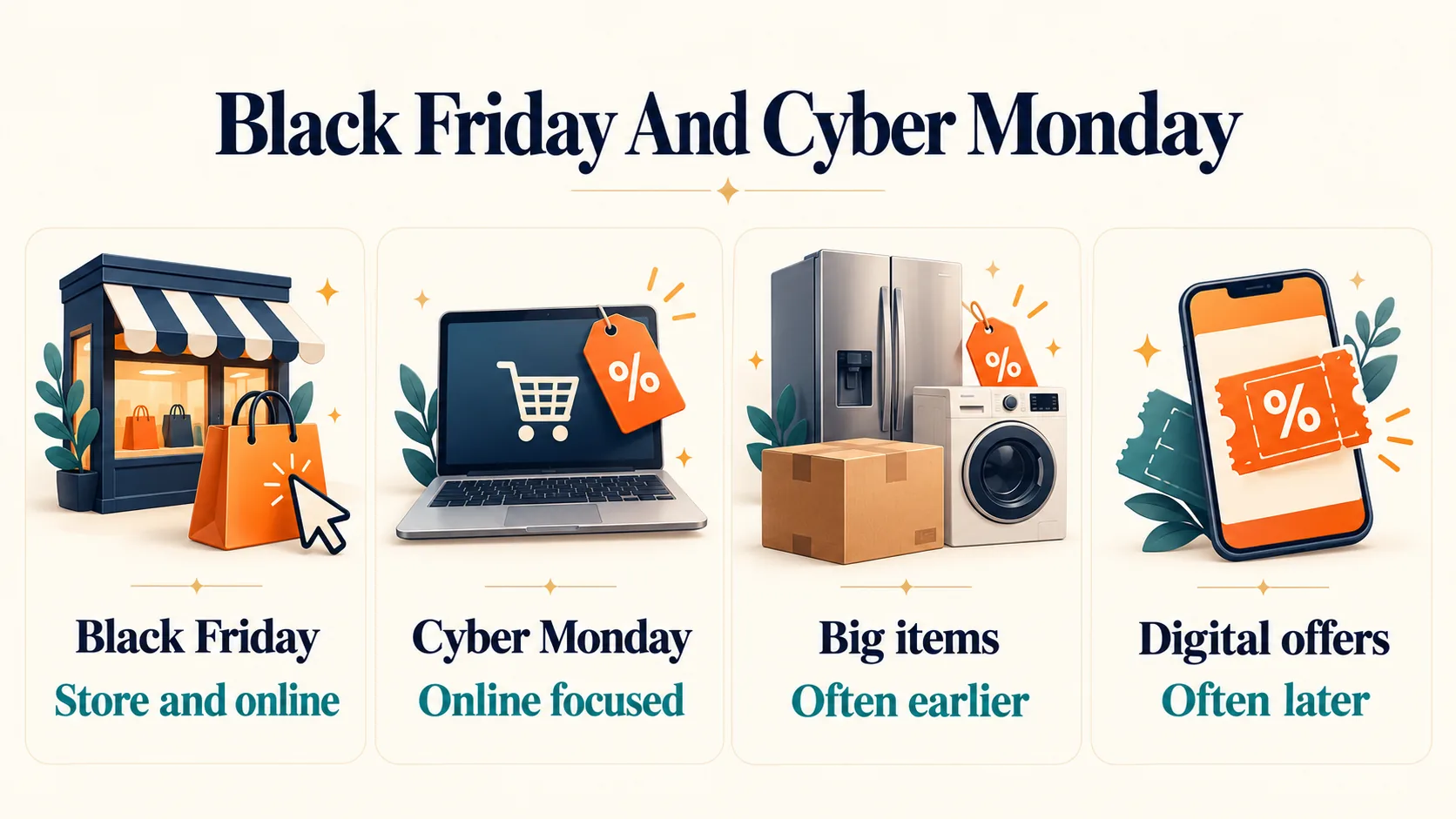
Straight answer: Cyber Monday is not consistently cheaper than Black Friday. Black Friday often brings stronger deals on big-ticket electronics, appliances, and in-store bundles.
Cyber Monday can improve prices on clothing, software, small electronics, and online-only offers.
Compare the same model, seller, shipping cost, warranty, and return terms instead of choosing by shopping day alone.
Cyber Monday and Black Friday now overlap across much of the shopping season. Retailers may launch one promotion early, extend it through the weekend, and replace selected offers online later.
That makes the day with the lowest advertised price difficult to predict. Shoppers get better results by comparing the exact item, its seller, and its total checkout cost.
The right answer also depends on what you want to buy. A television, laptop, coat, toy, or software subscription can follow a different discount pattern.
Inventory, shipping capacity, coupon rules, and return deadlines affect the practical value of an offer.
Knowing these differences helps you decide whether to buy during Black Friday or wait for Cyber Monday.
Black Friday Usually Leads Big Items
Black Friday traditionally emphasizes major purchases and highly visible doorbusters. Retailers use televisions, laptops, appliances, game systems, and furniture to attract attention.
These products may appear in advertising before the event, while stock limits encourage shoppers to act quickly.
The first promotion can be the strongest option for a specific model, but that is not guaranteed.
Physical stores still influence Black Friday strategy, even when a sale is available online. Retailers may offer store-exclusive bundles, pickup incentives, or promotions tied to local inventory.
A bundle can look cheaper while including accessories you would not otherwise buy. Compare the product number and included items before treating the advertised offer as a better value.
Large products also carry higher delivery and installation costs. A lower item price can disappear after freight charges, assembly fees, or an unwanted protection plan.
Check the final cart total and the delivery window. If the item is needed for a holiday event, certainty of stock and arrival may matter more than a possible later reduction.
Black Friday is therefore often the safer choice for a specific big-ticket product with limited inventory.
Waiting can work when the model is widely available and the retailer has a clear price adjustment policy.
Save the listing, note the model identifier, and review the seller terms before deciding whether a possible Cyber Monday change justifies the risk.
If you want the full background, read our Black Friday explainer.
Use FTC shopping guidance to review online buying protections and seller claims.
Cyber Monday Favors Online Categories
Cyber Monday developed around online shopping, so its offers often fit products that are easy to compare and ship.
Clothing, shoes, accessories, small electronics, beauty items, software, and digital subscriptions frequently receive online promotions.
Retailers can change these offers quickly because they do not need to coordinate shelf signs or store staffing.
Online promotions may use codes, email offers, app-only benefits, or spending thresholds. The headline discount may apply only to selected colors, sizes, brands, or sellers.
Read the promotion conditions before adding an item to your basket. A code that requires a minimum spend can encourage extra purchases and reduce the real value of the deal.
Cyber Monday can also bring more flexible browsing. Shoppers can compare several retailers, check user reviews, and monitor inventory without traveling between stores.
That convenience has limits when product pages hide marketplace sellers or show a different warranty than the manufacturer provides. Confirm who fulfills the order and who handles support.
Choose Cyber Monday when the item is widely stocked, easily shipped, and covered by a straightforward online promotion.
It is less attractive when the product has limited quantities, complex installation, or a strict delivery need.
The best online deal is the one that remains valuable after shipping, taxes, membership requirements, and return restrictions.
Consumer finance resources explain payment plans, credit terms, and borrowing costs — see consumer finance resources.
The Same Deal May Span Both Days
Many retailers no longer treat Black Friday and Cyber Monday as separate events. They may run a weeklong promotion, repeat the same offer across the weekend, or advertise a season-long sale.
In those cases, the shopping day does not determine the price. The product, promotion window, and available inventory determine whether waiting changes anything.
A retailer can also rotate promotions without changing the regular price. One day may include a gift card, another may include free delivery, and a later offer may use a coupon.
These incentives have different values depending on whether you would buy the extra item or use the service. Compare the complete benefit rather than the largest headline.
Prices can differ between the retailer website, mobile app, marketplace listing, and physical store. Some differences reflect shipping costs or seller fees rather than a genuine sale.
Record the exact model number, color, storage capacity, and included accessories. Two pages that use the same product name may describe different configurations.
Treat a sale period as a sequence of checkpoints. Check the product before Black Friday, during the main event, and around Cyber Monday if it remains available.
Use the retailer’s price history tools or saved-item alerts where available. This approach reveals whether the deal is changing or simply being promoted with new wording.
NIST security guidance supports safer account and payment practices during online shopping.
Inventory Can Outweigh Timing
A later promotion is useful only if the desired item remains available. Popular colors, capacities, sizes, and configurations can sell first, leaving less suitable alternatives.
Retailers may restock, but a restock is not certain and may arrive after a holiday deadline. Inventory risk makes timing more important for scarce or seasonal products.
Stock information deserves careful reading. Available online stock may differ from store stock, pickup stock, or marketplace inventory.
A listing can remain visible after the seller has limited fulfillment capacity. Check the stated delivery date, seller name, and cancellation policy.
A low price does not help if the order cannot arrive when needed.
Scarcity also affects comparison shopping. When a model disappears, shoppers may switch to a substitute without evaluating its features or warranty.
Prepare a short list of acceptable alternatives before the sales period. Include minimum requirements such as size, compatibility, storage, materials, or safety certifications.
Buy earlier when the product is essential, highly specific, or difficult to replace. Waiting makes more sense for a common item with several equivalent options.
Set a maximum acceptable total cost and a fallback product. This prevents urgency from turning a small possible saving into an unsuitable purchase.
USPS shipping resources help shoppers understand delivery services and package timing.
Compare Total Checkout Cost
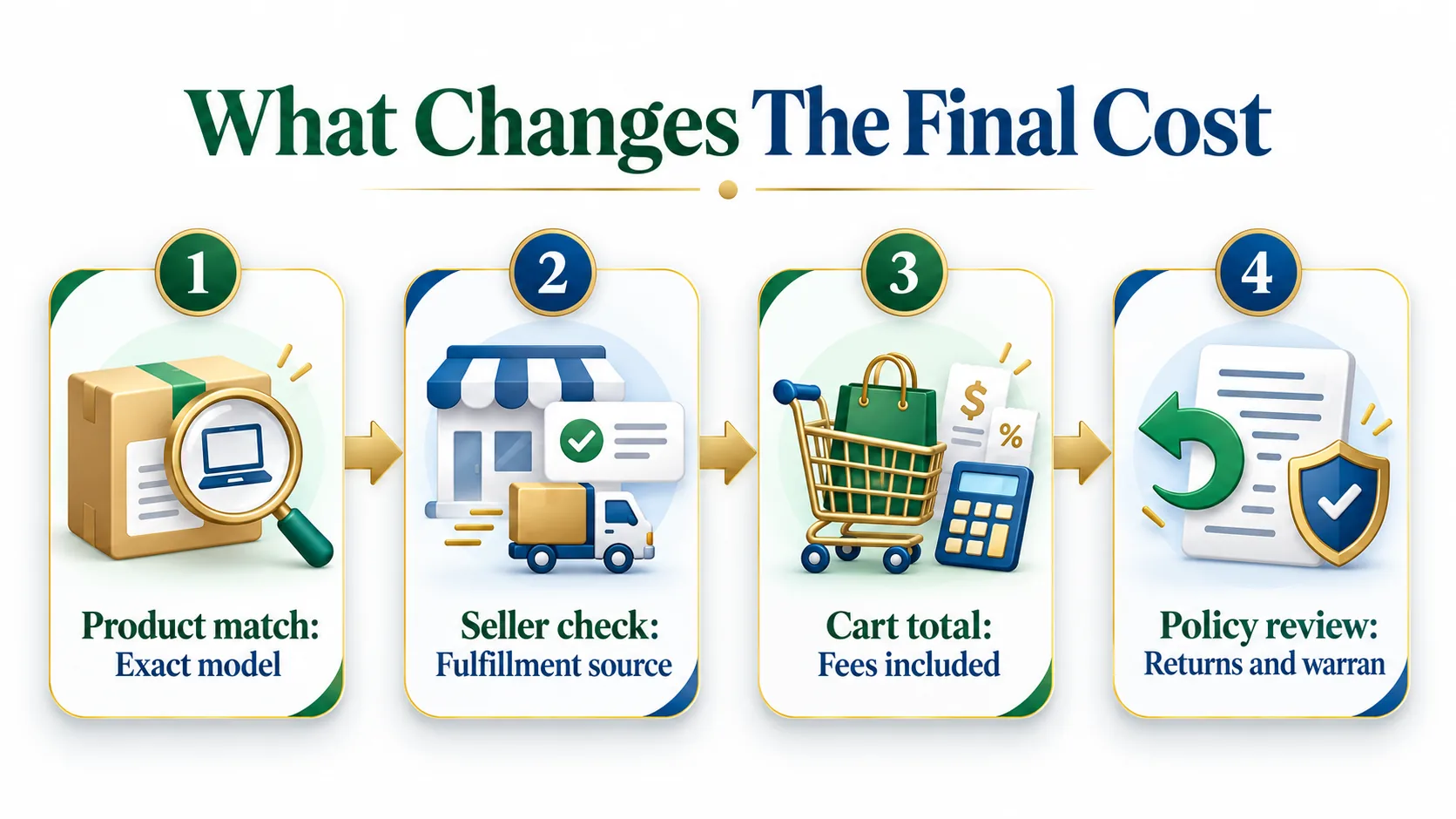
The displayed sale price is only one part of the purchase cost. Shipping, delivery, taxes, membership fees, required accessories, and recycling charges can change the final total.
Compare identical carts when possible. A retailer with a slightly higher item price may offer a lower delivered cost through free shipping or included services.
Coupons create another comparison problem. Some codes exclude sale items, limit quantities, or apply only to a retailer’s private-label products.
Others cannot be combined with loyalty rewards or gift-card promotions. Read the terms and apply the code before deciding. A discount that fails at checkout is not part of the offer.
Financing can make a purchase appear easier while increasing complexity. Review the annual percentage rate, deferred-interest conditions, minimum payments, and promotional end date.
A payment plan should not determine whether Cyber Monday is cheaper. Compare the cash total first, then evaluate financing separately if needed.
Returns and warranties affect value after checkout. Look for the return deadline, restocking charge, final-sale exclusions, and responsibility for return shipping.
Marketplace products may follow a different policy from the main retailer. The lower offer is not automatically better if returning a defective or unsuitable item costs more.
Use A Product-Specific Buying Rule
A simple buying rule should reflect the product rather than the calendar. Buy during Black Friday when stock is limited, the model is heavily promoted, or the purchase must arrive early.
Consider Cyber Monday when the item is widely available and an online coupon or category promotion is likely to matter.
For electronics, compare exact specifications rather than brand names alone. Screen size, processor generation, memory, storage, ports, and warranty coverage can differ between sale configurations.
Retailers sometimes use a special model number for a promotional bundle. Confirm that the product meets your needs before comparing prices.
For clothing and home goods, size availability and return rules often matter more than the sale label. Check fabric, dimensions, care instructions, and final-sale language.
For software or subscriptions, examine renewal terms and cancellation steps. A temporary introductory offer may become a recurring charge after the promotional period.
Set a decision deadline before shopping. If the item reaches an acceptable total cost and meets your requirements, buy it rather than chasing an uncertain lower offer.
If it misses your target, wait while monitoring stock. This rule limits impulse spending and makes both shopping days easier to evaluate.
Questions buyers ask
Is Cyber Monday cheaper than Black Friday?
Not consistently. Cyber Monday can offer stronger online promotions for clothing, software, small electronics, and selected accessories.
Black Friday often has prominent offers on appliances, televisions, laptops, and store bundles.
Compare the exact product, seller, shipping, warranty, and return policy because the lowest day varies by item.
Should I wait until Cyber Monday to buy?
Wait when the item is widely available, nonessential, and covered by a clear online promotion strategy. Buy earlier when stock is limited, the product is highly specific, or delivery timing matters.
Waiting can produce a better offer, but it can also mean losing the desired size, configuration, or seller.
Are Black Friday deals available online?
Yes. Many retailers publish Black Friday offers online, sometimes before the in-store event begins. Online listings can have different stock, shipping costs, sellers, and return rules.
Check the exact product number and final checkout total instead of assuming the online offer matches the store promotion.
Do prices drop again on Cyber Monday?
Some prices drop, while others stay unchanged or are replaced by a different incentive. Retailers may add an online coupon, free shipping, or a bundle rather than reduce the item price.
Track the exact listing and compare the total value. A later promotion is not guaranteed for every product.
What products are best to buy on Cyber Monday?
Cyber Monday often suits online-friendly categories such as clothing, accessories, software, digital services, small electronics, and selected home goods.
The strongest opportunity depends on the retailer and product. Check exclusions, minimum spending rules, shipping charges, and renewal terms before treating an online promotion as cheaper.
How can I compare Black Friday and Cyber Monday deals?
Record the exact model, seller, listed price, shipping, taxes, included accessories, warranty, and return policy. Compare identical configurations at multiple retailers.
Check whether a coupon or membership is required. This method reveals the real checkout cost and prevents a larger headline discount from hiding weaker terms.
Is it safer to shop on Black Friday or Cyber Monday?
Neither day is automatically safer. Use established retailers, verify the website address, pay through a protected method, and review seller information.
Avoid pressure to buy from an unfamiliar listing. Check return and warranty terms before payment, especially when a marketplace seller offers a price far below comparable listings.
More Black Friday and Cyber Monday guides
Planning the rest of your Black Friday? These cover the same shopping window:

