

In short: Black Friday is the Friday after Thanksgiving, so the number of days left changes daily.
Count forward from today to that Friday, then use the remaining time to set alerts, compare prices, and build a purchase list.
Knowing how many days remain until Black Friday helps shoppers prepare before sale messaging becomes urgent.
The event always falls on the Friday after Thanksgiving, rather than on one fixed calendar date.
A countdown gives you time to identify needed items, check normal prices, and decide what spending limit makes sense for your household.
Black Friday promotions often begin before the main shopping day and can continue through Cyber Monday. That makes the countdown useful for more than one morning of shopping.
Use the weeks ahead to compare retailers, join relevant email lists, review return policies, and avoid buying an item only because a timer makes it appear scarce.
The Black Friday Countdown Rule
The answer to how many days until Black Friday depends on today’s date. Black Friday occurs on the Friday after Thanksgiving in the United States.
Since Thanksgiving is observed on the fourth Thursday in November, the Black Friday countdown shifts from one calendar year to the next.
A calendar app can calculate the remaining days once you locate Thanksgiving and the Friday immediately after it. Count full days from the current day to that Friday.
If you are checking on Black Friday itself, the countdown has reached zero and retailers may already be running limited-time offers.
Do not confuse Black Friday with the entire holiday sales period. Many merchants launch early access events, member offers, or online promotions ahead of the traditional Friday.
Those offers may be worthwhile, but they do not change the event’s calendar definition.
The most useful countdown is one connected to a plan. Add reminders several weeks before Black Friday, then another reminder shortly before the event.
This creates time to research products and policies instead of making every decision when promotions and stock messages are competing for attention.
The U.S. federal holiday schedule lists Thanksgiving among the annual legal public holidays.
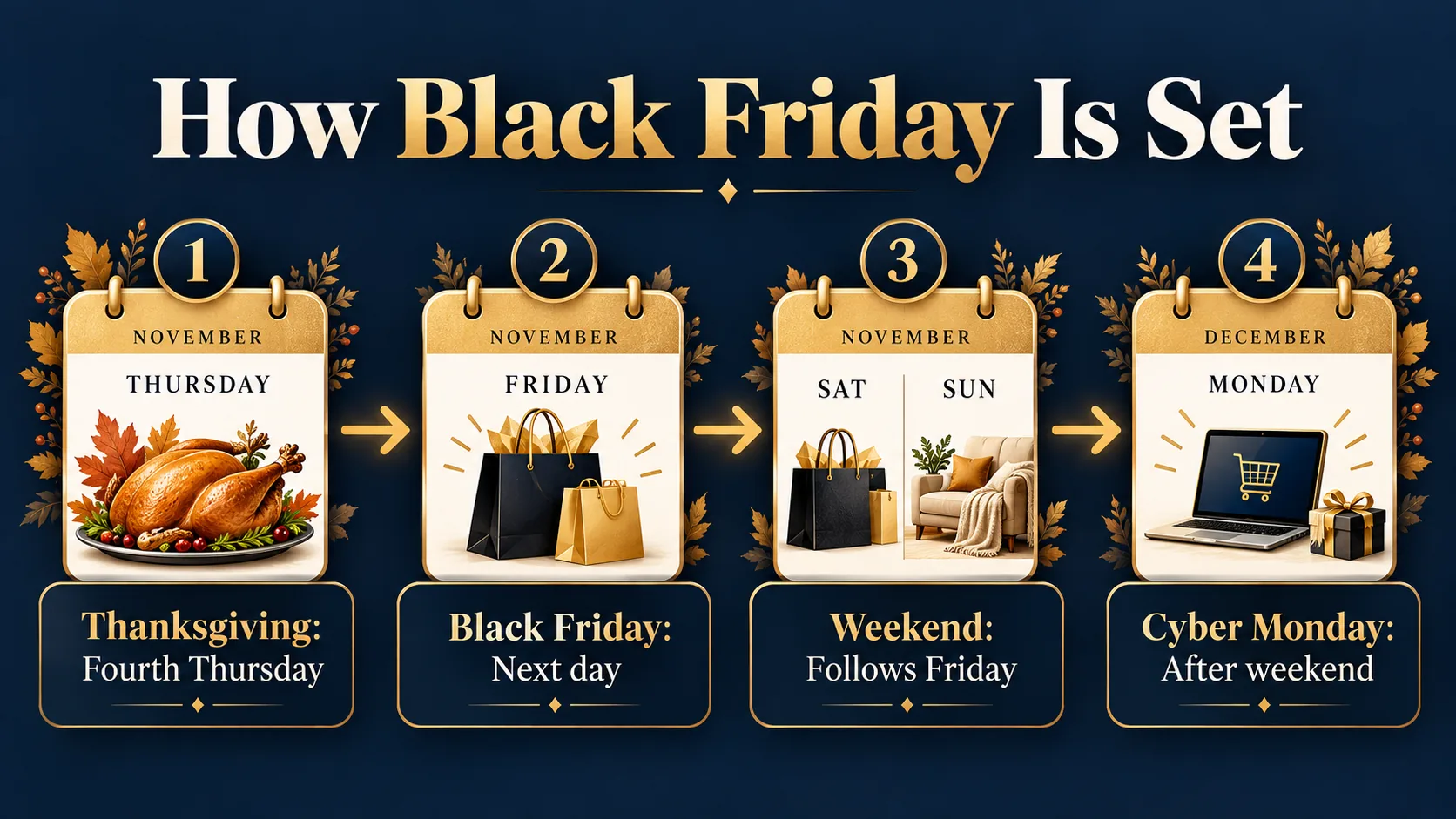
Why Thanksgiving Sets The Date
Thanksgiving determines the Black Friday schedule because Black Friday follows it by one day. The federal holiday is observed on the fourth Thursday of November.
That placement means Black Friday can arrive earlier or later within the month, even though the relationship between the two days never changes.
This moving placement affects how much shopping time exists before December holidays. An earlier Black Friday can leave more days for shipping, exchanges, and gift planning.
A later one can compress delivery windows, so shoppers may need to check retailer cutoffs sooner.
The rule also explains why Black Friday is not tied to a numbered day of November. Searching for a fixed date can lead to mistakes when planning travel, delivery, or time off.
Use the Friday-after-Thanksgiving rule when adding the event to a calendar.
Thanksgiving weekend includes several distinct retail moments. Black Friday is the Friday, the following Saturday is often associated with small businesses, and Cyber Monday follows the weekend.
Each may feature different inventory, channels, and terms, so a single shopping list should not assume identical offers.
Read Black Friday background for a concise overview of the shopping event and its history.
Plan Purchases Before Promotions
Start your Black Friday plan with a list of specific products or categories. Include model requirements, preferred sizes, compatibility needs, and a maximum acceptable total cost.
A detailed list makes it easier to recognize a suitable offer and harder for unrelated promotions to derail your budget.
Record normal prices before the sale period begins. Check several reputable retailers and note product specifications alongside the listed price.
A low promotional price is more meaningful when you know the usual range and whether the item is the same model, capacity, generation, or bundle.
Set alerts for products you would buy at an acceptable price, but do not let alerts replace comparison shopping. Retailer emails may highlight select items and limited quantities.
Check shipping charges, membership requirements, pickup availability, and return conditions before placing an order.
Learn the event structure with <a href=”https://blackfridaydealsstore.net/how-black-friday-works/”>our guide to the sales</a>.
It explains why advertised doorbusters, online releases, and extended promotions can follow different rules. Knowing those formats helps you decide whether to shop early, wait, or skip an offer.
A Cyber Monday overview explains the online-focused shopping event that follows Thanksgiving weekend.
Use Each Countdown Stage
When Black Friday is still far away, focus on research rather than checkout. Read manufacturer specifications, verify dimensions, and identify accessories that are actually necessary.
This stage is also useful for checking whether an older model would meet your needs without paying for features you will not use.
As the countdown gets shorter, narrow your list to priority purchases. Rank items by need, expected demand, and replacement urgency.
A broken essential or a planned gift may deserve more attention than an impulse upgrade that can wait until another sale period.
In the final days, verify account details and payment settings with retailers you trust. Save preferred delivery addresses and confirm store pickup options if they are relevant.
These small preparations reduce errors when an offer has a limited ordering window or a limited quantity.
On Black Friday, compare the final checkout total before confirming. Taxes, shipping, service plans, accessories, and bundle conditions can change the real cost.
If an offer is unclear, pause and read the terms instead of relying on a large headline or countdown clock.
Use official U.S. time when checking a retailer’s stated launch or expiration time.
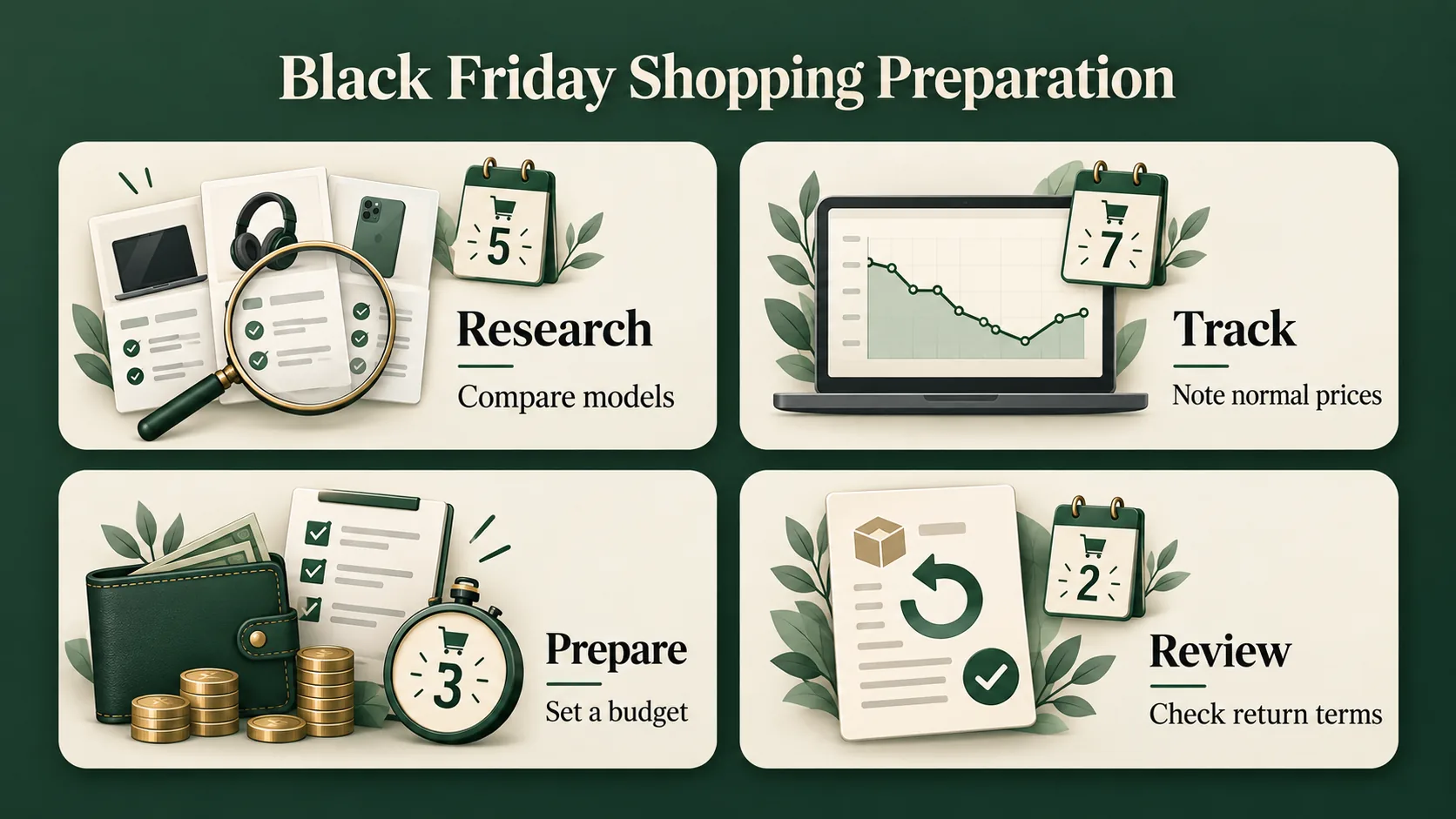
Compare Black Friday And Cyber Monday
Black Friday and Cyber Monday are connected, but they are not interchangeable. Black Friday traditionally follows Thanksgiving and often includes online, pickup, and in-store promotions.
Cyber Monday follows the weekend and is commonly associated with online shopping, although retailers may use both events across multiple channels.
A product offered on Black Friday may not have the same price or stock status on Cyber Monday. Some promotions run for several days, while others are limited to a particular event or sales channel.
Read the offer page for start times, end times, exclusions, and delivery limits.
Do not delay a planned purchase solely because you expect a better deal later. If an item meets your requirements, fits your budget, and has acceptable return terms, it may be sensible to buy.
Waiting can also mean lost inventory or a delivery estimate that no longer works.
Keep receipts, order confirmations, and screenshots of key offer terms after buying. These records help if an item arrives damaged, differs from the listing, or needs a return.
They also make it easier to compare later promotions without depending on memory.
Avoid Countdown Pressure Tactics
Countdown clocks can be useful when they show a genuine sale end time. They can also create pressure that distracts from the product details.
Treat every timer as a reason to review the terms quickly, not as proof that an item is a strong value.
Watch for language such as limited quantity, final hours, exclusive access, or today only. These claims may describe real conditions, but shoppers should still compare the exact item elsewhere.
A different retailer may have a similar model, clearer warranty support, or better return options.
Check whether a promotion requires a paid membership, financing agreement, trade-in, mail-in rebate, or bundled service. These conditions can affect the final value and may not suit every shopper.
Read the eligibility requirements before entering personal details or committing to payment.
Set a firm spending cap before the countdown reaches its final stage. If you find an unplanned offer, add it to a waiting list and revisit it later that day.
This approach separates a genuine need from a reaction to urgency and keeps the season manageable.
Questions buyers ask
How do I calculate days until Black Friday?
Find Thanksgiving on your calendar, then identify the Friday immediately after it. Count the full days between today and that Friday.
Calendar apps can do this automatically, but checking the holiday relationship matters because Black Friday does not use one fixed date every year.
Is Black Friday always after Thanksgiving?
Yes. Black Friday is the Friday after Thanksgiving in the United States. Thanksgiving is observed on the fourth Thursday in November, which is why Black Friday shifts within the month.
Use that rule instead of relying on a remembered numbered date.
When should I start preparing for Black Friday?
Start when you can research products without urgency. Make a list, compare normal prices, and identify required features well before major promotions appear.
The closer the event gets, the more useful it is to focus on priority items, retailer policies, and a firm spending limit.
Do Black Friday sales start before Black Friday?
Many retailers advertise promotions before Black Friday, including online-only events and early access offers. These campaigns can have separate terms and inventory from the main event.
Compare the product, final checkout cost, and return policy rather than assuming every early offer is the best available option.
Should I wait for Cyber Monday instead?
Wait only if you can accept the risk that stock or delivery timing may change. Cyber Monday can feature different online offers, but it does not guarantee a better deal on the same item.
Buy when the product meets your needs, budget, and return-policy requirements.
How can I tell if a Black Friday deal is good?
Compare the exact model with its usual price at several reputable retailers. Check specifications, bundle contents, shipping costs, membership conditions, and return rules.
A deal is more useful when it fits a planned need and has a clear final cost, not simply because the advertisement uses urgency.
Are Black Friday doorbusters available online?
Some doorbuster-style offers are available online, while others may be limited to stores, pickup, or a specific sales channel. Read the offer terms closely.
Check whether there is a stated quantity limit, a release time, an account requirement, or a restriction on delivery.
What should I do if an item sells out?
Do not rush into a different product without comparing its features and final cost. Check whether the retailer offers restock notifications, then review other reputable sellers.
If the item is not urgent, keep it on your list for later promotions rather than buying a poor substitute.
More Black Friday and Cyber Monday guides
Planning the rest of your Black Friday? These cover the same shopping window:

