
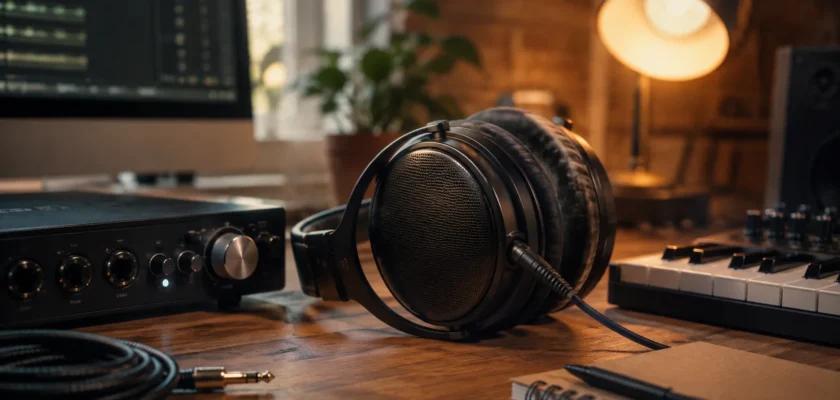
Quick answer: For studio headphones Black Friday shopping, start with the use case: closed-back monitoring, open-back mixing, or general recording.
Check cable style, impedance, adapters, and whether the listing favours studio, DJ, podcast, or instrument use.
Studio headphones black friday deals can look similar, but the titles point to different uses: monitor, mixing, DJ, podcasting, recording, keyboard, guitar, and general studio work.
The safest shortlist starts with design terms. Closed-back, open-back, semi-open, wired, over-ear, detachable cable, impedance, and adapter wording matter more than sale badges.
This guide compares only the available models listed here. It avoids invented measurements and sticks to what the product titles state or clearly imply.





Quick picks
- Best overall: Audio-Technica ATH-M50X Professional Studio Monitor Headphones, Black, — Professional monitor title, detachable cable, and broad studio positioning.
- Best value: Audio-Technica ATH-M20X Professional Studio Monitor Headphones, Black — Professional studio monitor wording in a simpler Audio-Technica option.
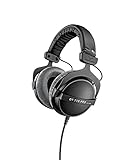
- Best for mixing: beyerdynamic DT 770 PRO 250 Ohm Over-Ear Studio Headphones in Black. C — Closed construction, wired studio use, and mixing stated in the title.
- Best for podcasts: M-Audio HDH40 – Over Ear Studio Headphones with Closed Back Design, Fl — Closed back, flexible headband, long cable, podcasting, and recording.
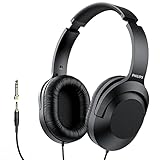
- Budget pick: PHILIPS Over Ear Wired Stereo Headphones for Podcasts, Studio Monitori — Wired over-ear headset with podcast, recording, keyboard, and guitar use.
Quick comparison chart
| Item | Good for | Worth noting |
|---|---|---|
| Audio-Technica ATH-M30x Professional Studio Monitor Headphones, Black | Studio monitoring | Professional studio monitor headphones |
| Sony MDR7506 Professional Large Diaphragm Headphone | Professional headphone use | Large diaphragm headphone |
| OneOdio Wired Over Ear Headphones Hi-Res Studio Monitor & Mixing DJ St | DJ and instrument use | 50mm neodymium drivers, 1/4 to 3.5mm audio jack |
| M-Audio HDH40 – Over Ear Studio Headphones with Closed Back Design, Fl | Podcast recording | Closed back design, flexible headband, 2.7m cable |
| Audio-Technica ATH-M20X Professional Studio Monitor Headphones, Black | Entry studio monitoring | Professional studio monitor headphones |
| beyerdynamic DT 770 PRO 250 Ohm Over-Ear Studio Headphones in Black. C | Studio mixing | 250 Ohm, closed construction, wired |
| PHILIPS Over Ear Wired Stereo Headphones for Podcasts, Studio Monitori | Computer and instruments | 6.3 mm add on adapter |
| beyerdynamic Dt 990 Pro Over-Ear Studio Monitor Headphones – Open-Back | Open-back monitoring | Open-back stereo construction, 80 Ohm |
| AKG Pro Audio K240 STUDIO Over-Ear, Semi-Open, Professional Studio Hea | Semi-open studio work | Semi-open professional studio headphones |
| Audio-Technica ATH-M50X Professional Studio Monitor Headphones, Black, | Flexible studio use | Professional grade, detachable cable |
There is deliberately no rating column on this page. We do not test these products ourselves, and Amazon does not supply customer ratings to this site, so any score here would be invented.
What each one offers
1. Audio-Technica ATH-M30x Professional Studio Monitor Headphones, Black — for studio monitoring

The Audio-Technica ATH-M30x is listed as a professional studio monitor headphone in black. Its title makes it a straightforward choice for buyers comparing studio-focused wired options.
What it is built from
Audio-Technica presents the ATH-M30x as a professional studio monitor headphone, which signals a design aimed at monitoring rather than casual wireless listening.
The title does not list cable details, driver size, or folding parts, so avoid assuming extras.
The black finish keeps the product description simple and studio oriented. Since the title does not mention open-back or semi-open construction, buyers should confirm the enclosure style on the live listing before ordering.
Nothing in the title claims a detachable cable, inline controls, Bluetooth, or noise cancelling.
That restraint matters because studio monitor wording usually prioritises wired signal paths, but the exact connection details should be checked in the listing.
What it handles best
The professional studio monitor label supports use around recording desks, audio interfaces, keyboards, and edit stations. It is aimed at people who want a monitoring headphone rather than a lifestyle headset with app features.
Because the title is concise, it suits buyers who want a known studio headphone name without sorting through DJ, podcast, gaming, or phone call wording. The value lies in the focused product role.
The ATH-M30x name sits below higher Audio-Technica models in this list, so it may appeal to users who want the brand’s studio monitor family without choosing the most feature-heavy title here.
What you get for the money
During sale periods, the right question is whether the current listing is the exact ATH-M30x professional studio monitor headphone, not whether a badge looks large. Similar names can hide different models.
Its value case is strongest when the buyer wants a clean studio monitor description and does not need a title that promises detachable cables, adapters, DJ use, or a stated impedance figure.
Best fit for
Choose this for basic home recording, editing, or monitoring when the priority is a studio monitor headphone from Audio-Technica. It should suit buyers who read listings carefully and do not require every accessory named upfront.
It is less ideal for someone who needs the title to confirm a 6.3 mm adapter, a long cable, or a particular impedance. Those details may exist elsewhere, but they are not in the given title.
People comparing the ATH-M20X, ATH-M30x, and ATH-M50X should treat this as the middle Audio-Technica option in this list. Pick it for a balanced title, not for unlisted premium features.
| In its favour | Downsides |
|---|---|
|
|
2. Sony MDR7506 Professional Large Diaphragm Headphone — for large diaphragm preference

The Sony MDR7506 is listed as a professional large diaphragm headphone. The title is short, so buyers should rely on the named professional positioning and verify details live.
What it is built from
Sony describes the MDR7506 as a professional large diaphragm headphone, which points to a studio and production role. The title does not state back type, cable length, connector size, or pad material, so those need listing checks.
The short product name can be helpful when matching a known model, but it leaves fewer construction clues than longer listings. Buyers should avoid reading unlisted features into the phrase professional headphone alone.
No wireless, Bluetooth, app, microphone, or noise cancelling terms appear in the title. That makes the MDR7506 relevant to wired studio searches, although the exact hardware connection is not stated in the supplied title.
What it handles best
The large diaphragm phrase is the main specification visible in the title. It supports buyers who want a professional headphone listing that highlights driver scale rather than lifestyle features or bundled accessories.
Its professional label makes sense for tracking, monitoring, editing, and general production contexts. The title does not narrow it to DJ, podcasting, keyboard, or guitar, so it reads as a broader studio option.
Because the model name is prominent and uncluttered, it can be easier to compare against exact seller listings. That matters when sale pages include nearby models or accessories with similar wording.
What you get for the money
The MDR7506 value check is mostly about authenticity of the exact title and current seller terms. Do not compare it with unrelated Sony consumer headphones that share only part of the name.
A shorter title gives fewer built-in extras to weigh, so value depends on whether the professional large diaphragm description fits the work. Confirm connector, cable, and included accessories before treating a deal as complete.
Best fit for
It suits buyers who want a professional Sony headphone listing and prefer a title that foregrounds large diaphragm design. It is a clean option for studios, edit desks, and audio classrooms.
It will not satisfy shoppers who need the title itself to promise detachable cables, closed construction, impedance, or an adapter. Those may be important, but they are outside the wording supplied here.
Choose it when the model name matters and the buying task is simple: verify the listing, check the live price, and confirm the accessory set before checkout.
| In its favour | Downsides |
|---|---|
|
|
3. OneOdio Wired Over Ear Headphones Hi-Res Studio Monitor & Mixing DJ Stereo Heads — for DJ and instruments

The OneOdio title is the most multi-use listing here, covering studio monitor, mixing, DJ, stereo headset, amp, computer, recording, phone, piano, guitar, and laptop use.
What it is built from
OneOdio lists this as wired over-ear headphones with Hi-Res studio monitor and mixing DJ headset wording. The title also states 50mm neodymium drivers, giving a clear driver detail not present in several rivals.
Connection flexibility is central to the listing, because the title names a 1/4 to 3.5mm audio jack. That wording matters for buyers moving between amps, computers, phones, instruments, and recording setups.
The over-ear and wired descriptions make the physical format clear, while the long title covers many use cases. It does not mention open-back, semi-open, detachable cable, or closed construction, so verify those separately.
What it handles best
The specification mix supports users who switch among DJ monitoring, recording, computer listening, piano practice, guitar use, and amp connection. The title frames it as a flexible wired headset rather than a narrow studio tool.
A stated 50mm neodymium driver detail helps shoppers who compare driver wording across listings. It should not be treated as a sound quality score, but it is a concrete title specification.
The included jack wording is useful when equipment has different socket sizes. Buyers with interfaces, amps, keyboards, guitars, laptops, and phones should still confirm their own port needs before relying on it.
What you get for the money
Value comes from the number of roles named in the title. If one headphone must cover computer, recording, phone, piano, guitar, laptop, amp, and DJ use, this listing is unusually explicit.
The trade-off is focus. A broad title may appeal to multi-device homes, but dedicated studio buyers may prefer a listing that states closed construction, open-back design, or professional monitor positioning more narrowly.
Best fit for
Pick it for a shared desk, practice corner, or small recording area where one wired over-ear headphone moves between several devices. The adapter wording is the main practical advantage in the title.
It may not suit buyers who want a clearly stated studio-only reference headphone. The DJ, headset, phone, and instrument language make it broader than a strict monitor listing.
It is also a sensible candidate for beginners who do not yet know whether their next use will be computer editing, guitar practice, piano playing, or recording.
| In its favour | Downsides |
|---|---|
|
|
4. M-Audio HDH40 – Over Ear Studio Headphones with Closed Back Design, Flexible Hea — for podcast recording

The M-Audio HDH40 title states closed back design, flexible headband, and a 2.7m cable. It directly targets studio monitoring, podcasting, and recording.
What it is built from
M-Audio gives the HDH40 several construction details in the title: over-ear format, closed back design, flexible headband, and a 2.7m cable. Those terms make the physical setup clearer than many shorter listings.
The closed back wording is important for recording spaces where spill control matters. The title does not state driver size, impedance, detachable cable, or adapter details, so those points should be checked separately.
A 2.7m cable is a practical detail for desks, podcast tables, and recording corners where the listener may sit away from the interface. The flexible headband wording suggests adjustability without naming materials.
What it handles best
The HDH40 title directly supports studio monitoring, podcasting, and recording. That makes it easy to match to spoken-word creators, home studio users, and musicians who need closed back headphones during capture.
Closed back design usually matters when a microphone is nearby, because the listing aims at monitoring without naming open-back leakage. Buyers should still match volume habits and microphone placement to their room.
The long cable can reduce the need for extensions around a desk or small booth. It is especially relevant when an audio interface, keyboard, or mixer sits away from the chair.
What you get for the money
The value case is concrete because the title names design, headband, cable length, and target uses. During a sale, compare those features against models that only state a general professional headphone label.
If podcasting and recording are the main tasks, this listing gives more relevant clues than a DJ-focused or open-back model. It is less about prestige and more about matching the stated working setup.
Best fit for
It suits podcasters, voiceover beginners, stream planners, and musicians who want closed back over-ear monitoring with a long cable. The title makes that role unusually clear.
It is not the best match for buyers who specifically want open-back or semi-open headphones for mixing perspective. The HDH40 title points in the opposite direction with closed back wording.
Choose it when a simple, wired, closed studio headphone is needed near microphones. Skip it if detachable cable wording, stated impedance, or premium monitor naming is essential.
| In its favour | Downsides |
|---|---|
|
|
5. Audio-Technica ATH-M20X Professional Studio Monitor Headphones, Black — for entry monitoring

The Audio-Technica ATH-M20X is listed as a professional studio monitor headphone in black. It is the simpler Audio-Technica monitor option in this product set.
What it is built from
The ATH-M20X title keeps construction language minimal, naming it as a professional studio monitor headphone in black. It does not state driver size, cable type, impedance, adapter contents, or enclosure design.
That simplicity can be useful for buyers who want a direct studio monitor category match. It also means the live listing should be checked carefully for connection type and included accessories.
No detachable cable, Bluetooth, microphone, open-back, or closed-back wording appears in the supplied title. The buyer should treat the title as a category signal, not a complete specification sheet.
What it handles best
The professional studio monitor wording supports use at a home recording desk, keyboard station, or editing setup. It is not framed as a DJ headset, gaming headset, or phone accessory.
Within the Audio-Technica choices here, the ATH-M20X is the leanest model name. It fits buyers who want the brand’s monitor line without the extra detachable cable wording of the ATH-M50X title.
The black finish and monitor label make it easy to place in a studio-oriented shortlist. Its best role is straightforward monitoring where advanced title features are not the deciding factor.
What you get for the money
For sale comparison, the ATH-M20X is most useful as a baseline. Check whether moving to ATH-M30x or ATH-M50X adds title features that matter to your setup.
Its value depends on keeping expectations aligned with the sparse title. If the current deal is for the exact professional studio monitor model, it can serve simple recording and practice needs.
Best fit for
It suits first home studio builds, student recording setups, and buyers replacing casual headphones with a studio monitor listing. The title is plain, but the category match is clear.
It is less suitable for users who need the title to confirm detachable cables, open-back mixing design, semi-open construction, or a named adapter. Those shoppers have clearer alternatives in this list.
Pick it when the aim is basic wired studio monitoring and the final listing confirms the connection details you need. Do not choose it for features absent from the title.
| In its favour | Downsides |
|---|---|
|
|
6. beyerdynamic DT 770 PRO 250 Ohm Over-Ear Studio Headphones in Black. Closed Cons — for closed studio mixing

The beyerdynamic DT 770 PRO title is specific: 250 Ohm, over-ear, black, closed construction, wired for studio use, and ideal for mixing in the studio.
What it is built from
This DT 770 PRO listing gives unusually clear structural information: over-ear format, closed construction, wired studio use, and black finish. It also states 250 Ohm, which is vital for source matching.
Closed construction separates it from open-back and semi-open models in this list. That wording suits users who want isolation-oriented studio headphones, though the title does not describe cable length or connector accessories.
The 250 Ohm figure should prompt buyers to check their interface, amp, or headphone output. The title provides the impedance number, but it does not state how any given device will drive it.
What it handles best
The listing explicitly says ideal for mixing in the studio, so it is the clearest mixing-focused closed-back option here. That makes it easy to shortlist for dedicated production desks.
Wired studio use reduces ambiguity for buyers avoiding Bluetooth or app-driven features. The title indicates a conventional studio workflow where the headphone connects to production equipment rather than a phone-first setup.
The closed construction can be relevant for tracking, editing, and monitoring near other people. Buyers wanting open ambience for mixing may still prefer the DT 990 PRO or AKG K240 title.
What you get for the money
The value argument is precision. The title gives impedance, back type, format, colour, wired use, and mixing role, so there is less guesswork than with minimal listings.
It is only good value if the buyer’s gear and workflow suit a 250 Ohm wired studio headphone. A sale badge cannot fix a mismatch with the intended source device.
Best fit for
Choose it for a studio desk, interface-based setup, or mixing-focused room where closed construction is preferred. It fits buyers who already understand why 250 Ohm matters.
It may not suit phone-only listening or low-power outputs unless the full setup can support the stated impedance. The title makes that number too important to ignore.
It is also not the obvious pick for open-back preference. Anyone seeking a more open construction should compare the DT 990 PRO or semi-open AKG K240 listing instead.
| In its favour | Downsides |
|---|---|
|
|
7. PHILIPS Over Ear Wired Stereo Headphones for Podcasts, Studio Monitoring and Rec — for computers and instruments

The PHILIPS title covers over-ear wired stereo headphones for podcasts, studio monitoring, recording, computer, keyboard, and guitar, with a 6.3 mm add-on adapter.
What it is built from
PHILIPS describes an over-ear wired stereo headphone with a headset role for computer, keyboard, and guitar use. The title also states a 6.3 mm add-on adapter, which is a useful connection clue.
The product wording points to practical wired use rather than wireless convenience. It does not name back type, impedance, driver size, detachable cable, or cable length, so those remain listing checks.
Because the title includes podcasts, studio monitoring, and recording, the construction appears aimed at desk and instrument setups. The adapter wording is the clearest physical accessory detail in the supplied title.
What it handles best
This is a strong candidate for buyers whose setup crosses computer audio, keyboard practice, guitar practice, podcasting, and recording. The title directly names each of those environments.
The 6.3 mm add-on adapter matters when connecting to instruments, interfaces, or audio gear with larger headphone sockets. Buyers should still confirm whether their source needs that size.
The over-ear wired stereo format is simple and predictable for home production. It avoids battery, pairing, and codec concerns that are outside the listed studio monitoring and recording use.
What you get for the money
Value comes from broad compatibility wording and the named adapter. If those solve your setup, this listing may reduce the need to buy a separate connector.
It is less compelling for buyers who want a title with professional-grade, critically acclaimed, 250 Ohm, closed construction, or open-back wording. This listing prioritises everyday studio and instrument use.
Best fit for
It suits home users who move between a computer, keyboard, guitar, and simple recording tasks. The adapter wording makes it practical for mixed equipment rooms.
It may not suit someone building a mixing-focused studio around a specific impedance or back design. The title leaves those technical choices unspecified.
Choose it for versatile wired practice and podcast monitoring. Skip it if the buying decision depends on a detachable cable, a precise driver specification, or a named enclosure type.
| In its favour | Downsides |
|---|---|
|
|
8. beyerdynamic Dt 990 Pro Over-Ear Studio Monitor Headphones – Open-Back Stereo Co — for open-back monitoring

The beyerdynamic DT 990 PRO title states open-back stereo construction, wired use, 80 Ohm impedance, black limited edition colour wording, and over-ear studio monitor design.
What it is built from
The DT 990 PRO listing is clear about its open-back stereo construction and over-ear monitor format. It is wired and states 80 Ohm, giving buyers two important setup details before opening the full listing.
Open-back construction is the central design point. It separates this headphone from closed models in the list and affects where it makes sense to use, especially around microphones or shared rooms.
The title includes black limited edition wording, but colour should not outweigh function. It does not mention detachable cable, adapter contents, or cable length, so those details should be checked live.
What it handles best
The open-back stereo construction supports buyers who want an airy studio monitor concept rather than a closed isolation design. It is most relevant where leakage is acceptable.
An 80 Ohm figure gives a clearer source-matching clue than listings without impedance. Buyers should compare it with their interface, amp, keyboard, or computer output before deciding.
The wired format suits production desks where latency, batteries, and pairing are unwanted. The title frames it as a studio monitor headphone, not as a phone-first or travel headset.
What you get for the money
The deal is attractive when the buyer specifically wants open-back monitoring and can use the stated 80 Ohm version. A lower live price on a closed model is not the same need.
Its value weakens if recording near microphones is the main job. In that case, the open-back wording should push shoppers toward a closed construction option instead.
Best fit for
Choose it for mixing, editing, and listening in a quiet space where sound leakage is not a problem. The open-back label is the defining reason to shortlist it.
It does not suit vocal tracking, podcasting beside a live microphone, or shared rooms where leakage matters. Buyers needing isolation should compare the DT 770 PRO or M-Audio HDH40 wording.
It is best for users who know they want the 80 Ohm open-back variant. If the impedance or construction is unfamiliar, read the listing twice before checkout.
| In its favour | Downsides |
|---|---|
|
|
9. AKG Pro Audio K240 STUDIO Over-Ear, Semi-Open, Professional Studio Headphones — for semi-open studio work

The AKG Pro Audio K240 STUDIO is listed as an over-ear, semi-open, professional studio headphone. It sits between closed and open design choices in this guide.
What it is built from
AKG describes the K240 STUDIO as over-ear, semi-open, and professional. Those three title terms give a clear design identity without listing impedance, cable style, connector size, or included accessories.
Semi-open construction is the feature to notice. It is not the same as closed-back isolation and not the same as fully open-back wording, so buyers should match it to their room.
The over-ear shape and professional studio headphone label point toward desk-based audio work. The title does not add DJ, podcast, guitar, keyboard, or phone wording, keeping the role studio focused.
What it handles best
The semi-open design language supports users who want some open character in a professional studio headphone. It is a useful middle option between closed monitoring and open-back mixing titles.
Because the title is focused, it suits buyers comparing construction types rather than accessory bundles. The key choice is whether semi-open design fits the room and microphone situation.
The K240 STUDIO name is easy to separate from broad multi-use listings. It is framed around professional studio headphones, not as a headset for calls, phones, or general computer accessories.
What you get for the money
Value depends on wanting the semi-open design specifically. If isolation for recording is required, a closed-back title may make more sense even when the live price is similar.
The listing is strongest for buyers who understand the compromise implied by semi-open wording. It offers a distinct category role rather than a long list of accessories or device examples.
Best fit for
It suits studio users who want an over-ear professional headphone and are comfortable with semi-open construction. It can fit editing, mixing study, and controlled listening rooms.
It is less suited to podcasting beside sensitive microphones or tracking where bleed control is the first priority. A closed-back model title would be safer for that use.
Choose it when the design type matters more than driver size, adapter wording, or detachable cable claims. The title is about construction and professional studio role.
| In its favour | Downsides |
|---|---|
|
|
10. Audio-Technica ATH-M50X Professional Studio Monitor Headphones, Black, Professio — for flexible studio use

The Audio-Technica ATH-M50X title states professional studio monitor headphones, black finish, professional grade wording, critically acclaimed wording, and detachable cable.
What it is built from
The ATH-M50X listing gives a stronger feature clue than the other Audio-Technica entries because it states detachable cable. It is also described as professional studio monitor, professional grade, and black.
Detachable cable wording matters for storage, replacement planning, and desk flexibility. The title does not state cable length, impedance, back design, driver size, or adapter contents, so confirm those live.
Professional grade and critically acclaimed are title claims, not measurements. They help identify the positioning of the product, but buyers should still choose based on fit, connection, and studio use.
What it handles best
The professional studio monitor wording supports recording, editing, and monitoring roles. The detachable cable gives it a practical advantage over titles here that do not mention cable removal.
Within the Audio-Technica models listed, it is the most feature-forward title. Buyers comparing ATH-M20X, ATH-M30x, and ATH-M50X should note that only this one names a detachable cable.
The listing is broad enough for a main studio headphone choice without drifting into gaming or wireless wording. It stays centred on professional monitor use and cable practicality.
What you get for the money
Its value case is strongest when the current deal keeps it close enough to simpler models that the detachable cable and professional grade wording justify choosing up.
Do not buy it only because the title says critically acclaimed. Treat that as positioning, then verify the exact model, cable contents, return terms, and live price.
Best fit for
Choose it as the overall pick if you want an Audio-Technica professional monitor title with a detachable cable. It suits home studios, edit desks, and flexible recording setups.
It may be more than needed for buyers who want the simplest studio monitor listing. The ATH-M20X or ATH-M30x titles may be enough for basic monitoring.
It is not the choice for someone specifically seeking open-back, semi-open, or stated impedance wording. The DT 990 PRO, AKG K240, or DT 770 PRO titles speak more directly there.
| In its favour | Downsides |
|---|---|
|
|
How Studio Headphone Discounts Usually Move
Retailers show live prices, while brands and sellers may set promotions, coupons, or temporary reductions. The visible deal can change without the product itself changing.
A list price is not always the price most buyers recently paid. Treat it as a reference point, then compare the current cart price and the exact model name.
Studio headphones often have several close variants. Impedance, back type, cable style, and colour wording can separate one listing from another, even when the name looks familiar.
Prices can move during the event as stock, seller participation, and competing offers shift. A lower badge is less useful than confirming the exact title matches your need.
Bundles and accessories can blur value. An adapter, long cable, or detachable cable may matter more than a small visible saving if it prevents a second purchase.
Black Friday falls on Friday, November 27, 2026 and Cyber Monday on Monday, November 30, 2026. Prices in most categories start moving in early November rather than only on the day itself.
Worth reading before you commit: Sony professional audio support, FTC online shopping advice.
How to Choose Studio Headphones During the Sale
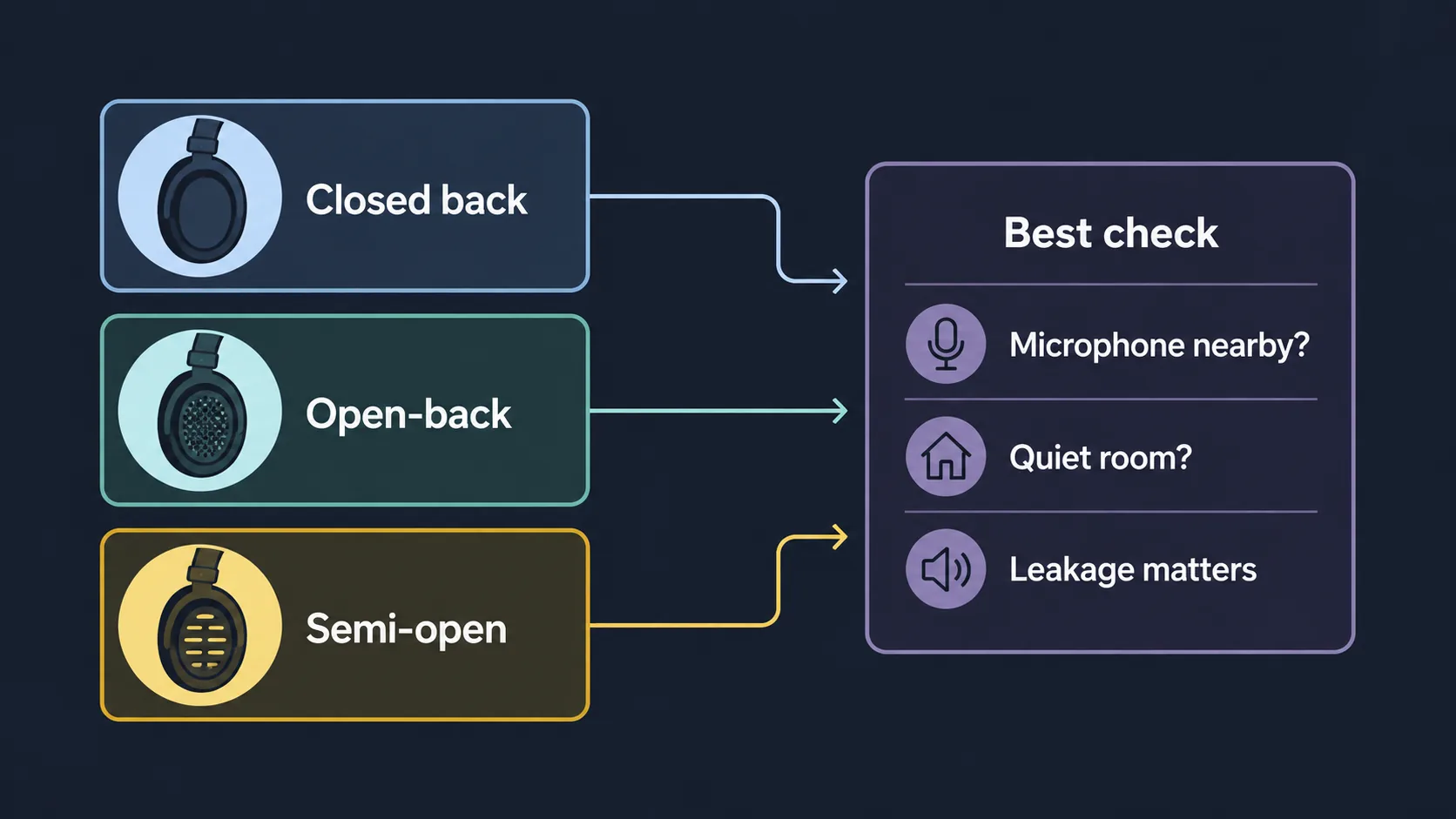
Back design. Closed, open-back, and semi-open wording changes the best use. Closed designs suit recording near microphones, while open or semi-open titles suit quieter mixing spaces.
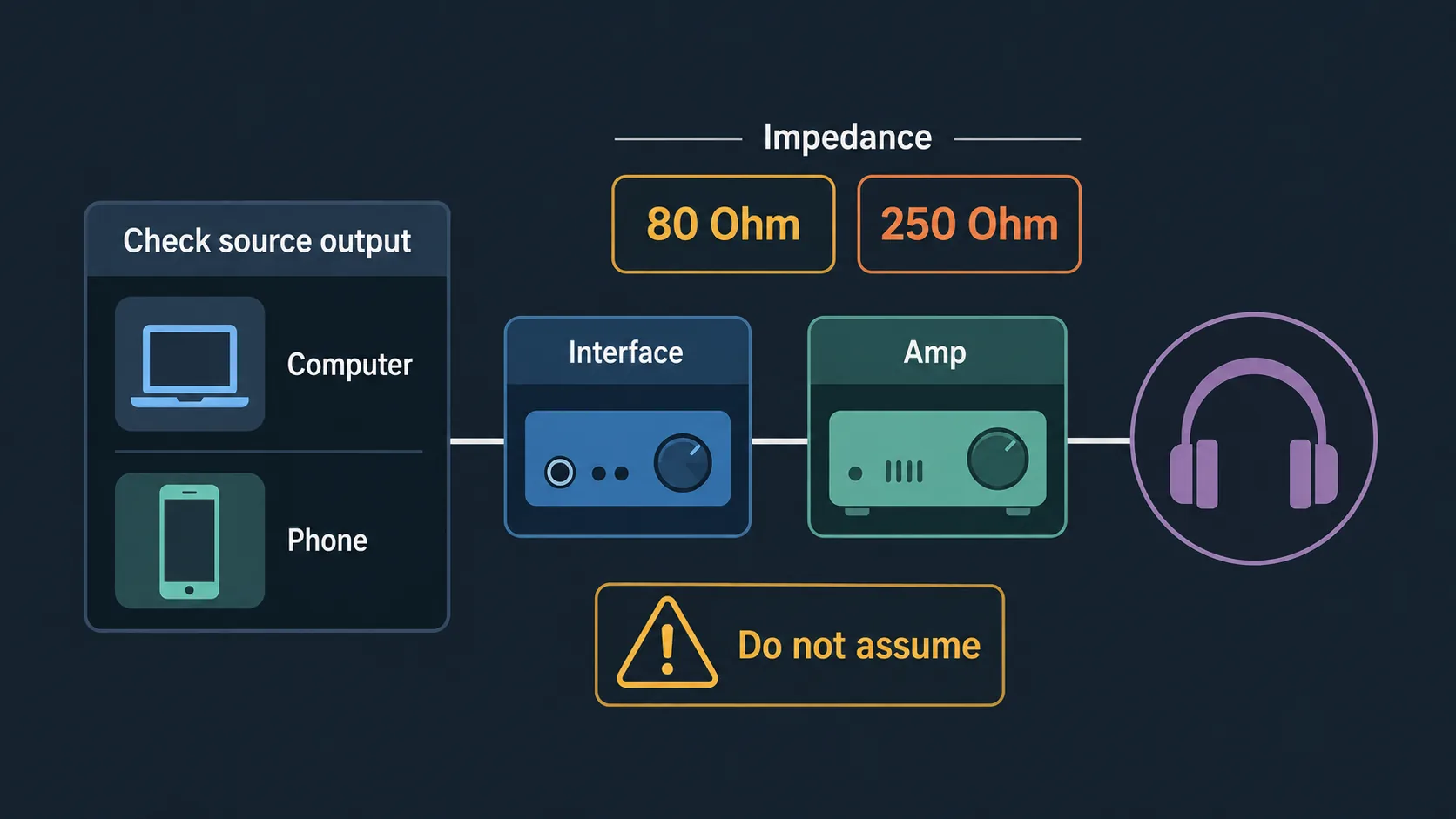
Impedance. If a title states 250 Ohm or 80 Ohm, match that number to your interface, amp, or headphone output. Do not assume every laptop or phone is ideal.
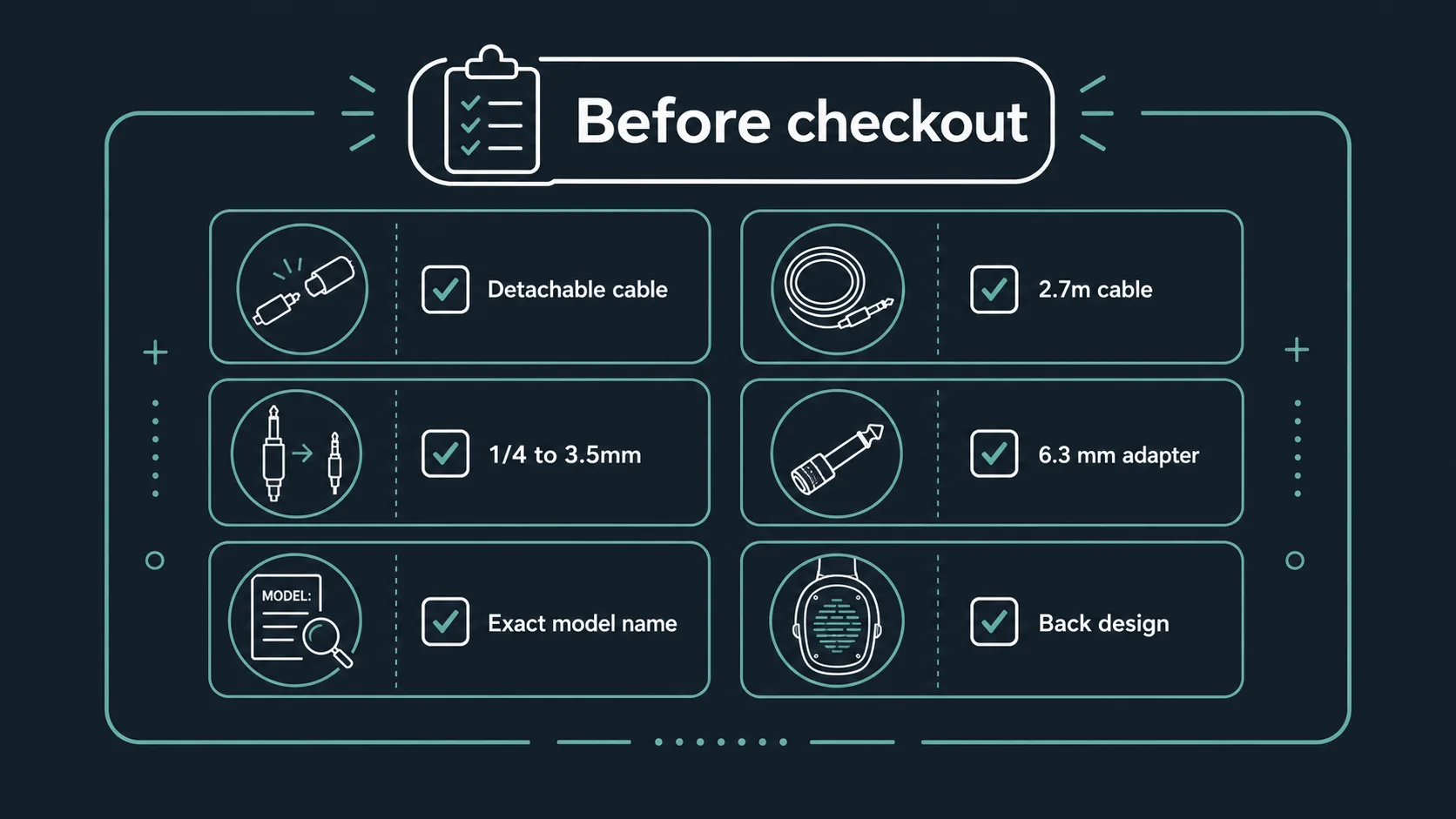
Cable details. A detachable cable, 2.7m cable, or adapter can decide real value. Check whether the listing names the connection you need before comparing sale badges.
Use wording. Monitor, mixing, DJ, podcasting, recording, keyboard, and guitar are not identical clues. Pick the title that names your main task instead of the broadest description.
Connector size. Studio gear often uses larger headphone sockets than phones or laptops. Titles that mention 1/4, 3.5mm, or 6.3 mm adapters reduce guesswork.
Model variants. Similar names can have different impedance, colour, cable, or construction wording. During sales, confirm the exact title before checkout rather than trusting a thumbnail.
Easy to get wrong. Buying open-back headphones for recording vocals can cause leakage into the microphone. If the title says open-back, treat it as a room-sensitive choice.
Easy to get wrong. Ignoring impedance can make a studio headphone a poor match for the source. When 250 Ohm or 80 Ohm appears, check the device driving it.
Easy to get wrong. Assuming every professional headphone includes the adapter you need can cause delays. Look for 1/4, 3.5mm, or 6.3 mm wording in the title.
Easy to get wrong. Treating marketing phrases as test results can mislead. Professional grade or critically acclaimed wording is not a measured rating, so use it only as positioning.
Easy to get wrong. Comparing unlike designs by sale badge alone misses the point. Closed, open-back, and semi-open headphones solve different problems in a studio.
Easy to get wrong. Choosing a DJ or multi-device headset when you need a focused mixing headphone can add unwanted compromises. Match the title to the main job.
Worth reading before you commit: Audio-Technica headphones support, beyerdynamic headphone help.
What goes into the picks
We do not physically test these products, and we say so rather than implying otherwise.
We start from what is actually listed and in stock on Amazon in this category, and remove anything out of stock or without a live price. For this page that left 10 products.
We then read each manufacturer specification and separate the standardised figures from the marketing ones. Where a figure is the manufacturer’s own claim, we say so.
Where two products look similar on paper, we say so instead of manufacturing a difference. A page that pretends every product has a clear winner is not much use.
We also drop products that are listed but unavailable. A recommendation you cannot act on wastes your time, and stock in this category turns over quickly through November.
Nothing on this page is an independent measurement, and we do not present it as one. Where a number comes from the manufacturer, we attribute it to the manufacturer.
The bottom line
The top pick is the Audio-Technica ATH-M50X because its title combines professional studio monitor wording with a detachable cable. That gives a practical edge without drifting into wireless or lifestyle claims.
The beyerdynamic DT 770 PRO suits buyers who want closed construction, wired studio use, 250 Ohm impedance, and mixing wording stated directly in the product title.
The beyerdynamic DT 990 PRO is the better fit when open-back stereo construction and an 80 Ohm listing are the main requirements for a quiet studio space.
The M-Audio HDH40 is strongest for podcasting and recording because the title names closed back design, flexible headband, and a 2.7m cable.
The OneOdio and PHILIPS listings suit multi-device rooms where computers, amps, phones, keyboards, guitars, or adapters matter more than a narrow studio monitor title.
The Sony MDR7506, AKG K240 STUDIO, ATH-M30x, and ATH-M20X are best compared by the role stated in each title: professional, semi-open, or studio monitor.
Worth reading before you commit: AKG professional headphones.
Frequently asked questions
Are studio headphones worth buying on Black Friday?
They can be, if the exact model, impedance, back design, and cable details match your setup. Do not judge only by the deal badge.
What does closed back mean for studio headphones?
Closed back wording points to a design that is more suitable around microphones than open-back options. It is often chosen for recording and monitoring.
Are open-back headphones good for recording?
Open-back headphones are usually less suitable near live microphones because sound can leak. They are more often considered for quiet mixing or listening spaces.
What does 250 Ohm mean on studio headphones?
It is an impedance figure. If a title states 250 Ohm, check that your interface, amp, or headphone output is suitable before buying.
Do I need a 1/4 inch adapter?
You may need one for audio interfaces, amps, keyboards, or studio gear. Look for 1/4, 3.5mm, or 6.3 mm wording in the listing.
Are detachable cables important on studio headphones?
They can help with storage, replacement, and desk flexibility. If this matters, choose a listing that states detachable cable in the title.
Which studio headphones are best for podcasting?
Look for closed back and recording or podcasting wording. In this list, the M-Audio HDH40 title directly names podcasting, recording, and closed back design.
Should I buy by brand or specification?
Use brand to shortlist, then choose by back type, impedance, cable, adapter, and stated use. The title should match your studio task.
More audio and music gear deals this Black Friday
Comparing options before the sale? These guides cover the same Black Friday and Cyber Monday window:
- Audio Black Friday guide: where the real discounts are
- Rodecaster Pro Black Friday deals
- Studio One Black Friday deals
- Shure MV7 Black Friday deals
- Rode Black Friday deals
- Shure SM7B Black Friday deals
- How Many Days Until Black Friday?
- Why Black Friday Is Bad?
Black Friday Deals Store is a participant in the Amazon Services LLC Associates Program. We earn a commission from qualifying purchases made through links on this page, at no additional cost to you.
Prices and availability are shown by Amazon at the time you click, and change frequently. Earning a commission does not change which products we cover or what we say about them.

