
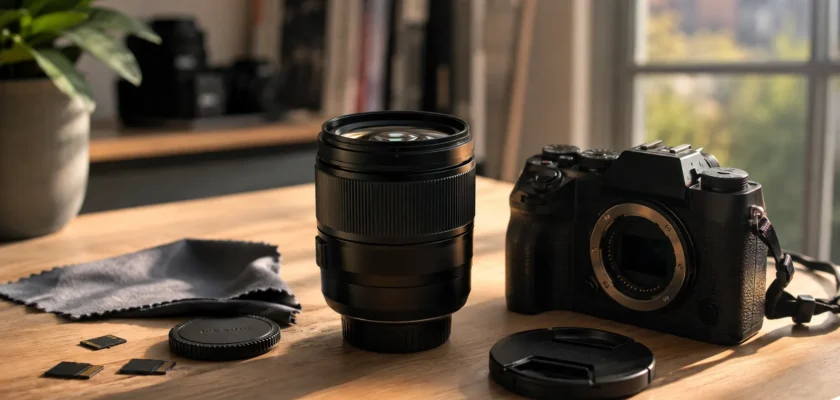
The gist: For sigma lens black friday shopping, match the mount first, then the focal range and aperture.
Sony E and Canon EF options differ sharply here, from compact primes to Art zooms and long telephoto reach.
sigma lens black friday deals can look simple, but mount fit matters before any sale tag. This list covers Sony E and Canon options only.
The titles show primes, standard zooms, macro-style zoom reach, and long telephoto coverage. That spread suits different camera bags.
Use this guide to compare what the title confirms. Avoid assuming stabilisation, autofocus behaviour, or accessories unless the listing states them.






The short list
- Best overall: Sigma 24-70mm F2.8 DG DN Art for Sony E Lens ,Black — F2.8 standard zoom range for Sony E with Art branding.
- Best value: Sigma 28-70mm F2.8 DG DN for Sony E — Shorter F2.8 Sony E zoom with a flexible everyday range.
- Best for portraits: Sigma 85mm f/1.4 DG HSM Art Lens for Canon EF (321954) — 85mm f/1.4 Art title suits portrait-focused Canon EF buyers.
- Best for reach: Sigma 150-600mm 5-6.3 Contemporary DG OS HSM Lens for Canon — 150-600mm range is the longest option in this list.
- Budget pick: Sigma 30mm F1.4 Contemporary DC DN Lens for Sony E — 30mm F1.4 prime keeps the title simple and focused.
Quick comparison chart
| The pick | Best for | Main detail |
|---|---|---|
| Sigma 24-70mm F2.8 DG DN Art for Sony E Lens ,Black | Sony E standard zoom | 24-70mm F2.8 DG DN Art |
| Sigma 30mm F1.4 Contemporary DC DN Lens for Sony E | Sony E normal prime | 30mm F1.4 Contemporary DC DN |
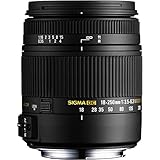
| Sigma 18-250mm f3.5-6.3 DC Macro OS HSM for Canon (883101) (Renewed) | Canon renewed travel range | 18-250mm f3.5-6.3 DC Macro OS HSM |
| Sigma 18-35mm F1.8 Art DC HSM Lens for Canon, Black (210101) | Canon fast wide zoom | 18-35mm F1.8 Art DC HSM |
| Sigma 150-600mm 5-6.3 Contemporary DG OS HSM Lens for Canon | Canon long telephoto | 150-600mm 5-6.3 Contemporary DG OS HSM |
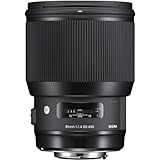
| Sigma 85mm f/1.4 DG HSM Art Lens for Canon EF (321954) | Canon EF portrait prime | 85mm f/1.4 DG HSM Art |
| Sigma 28-70mm F2.8 DG DN for Sony E | Sony E compact zoom | 28-70mm F2.8 DG DN |
| Sigma 56mm for E-Mount (Sony) Fixed Prime Camera Lens, Black (351965) | Sony E short tele prime | 56mm fixed prime E-Mount |
There is deliberately no rating column on this page. We do not test these products ourselves, and Amazon does not supply customer ratings to this site, so any score here would be invented.
Going through the list
1. Sigma 24-70mm F2.8 DG DN Art for Sony E Lens ,Black — Sony E standard zoom

The Sigma 24-70mm F2.8 DG DN Art for Sony E Lens sits as the broadest Sony E Art zoom in this list.
What it is built from
The title identifies this as a DG DN Art lens for Sony E, so the fit points toward mirrorless Sony E bodies. It does not state materials, sealing, weight, filter size, or supplied accessories.
A 24-70mm range usually means a single zoom body rather than several separate primes. The title confirms a black finish, but it gives no detail about barrel parts, switches, hood design, or control rings.
Art branding in the title places it in Sigma’s named Art line, yet the title alone should not be stretched into claims about handling. Check the listing images and maker page for construction notes.
What the spec supports
The 24-70mm range covers wide, normal, and short telephoto angles on paper. That makes it a flexible fit for travel, events, products, and family scenes when a Sony E buyer wants one main zoom.
The F2.8 marking is constant in the title, giving a clear aperture cue across the zoom range. This can support lower-light work and background separation compared with slower variable-aperture zoom titles.
DG DN indicates a design named for full-frame mirrorless use in Sigma’s system language. Buyers should still match their Sony E camera and read the listing for compatibility notes before ordering.
Is it worth it
Value depends on whether a buyer needs the full 24-70mm span or would accept a narrower 28-70mm option. During sale periods, compare live prices only after confirming both are Sony E DG DN lenses.
This is the most obvious all-rounder here for Sony E shoppers who want Art branding and F2.8 in one title. It may be more lens than needed for a buyer who mainly wants a small prime.
Who this is for
Choose it if the camera bag needs one standard zoom for mixed subjects, from indoor scenes to portraits. It is less suitable for buyers who need extreme telephoto reach or a clearly compact lens.
Sony E users moving from kit-style zooms may find the title’s F2.8 and Art wording appealing. Canon users should skip it, because the title is specific to Sony E rather than Canon EF.
It fits shoppers who prefer a versatile focal range over a single fixed view. It does not fit someone who wants the simplest prime, the longest wildlife reach, or a renewed Canon listing.
| What works | Cons |
|---|---|
|
|
2. Sigma 30mm F1.4 Contemporary DC DN Lens for Sony E — Sony E normal prime

The Sigma 30mm F1.4 Contemporary DC DN Lens for Sony E is the shorter Sony E prime option here.
What it is built from
This title names a Contemporary DC DN lens for Sony E, which signals a Sigma mirrorless mount fit. It does not state casing materials, weather protection, stabilisation, hood contents, or any case inclusion.
Because it is a 30mm prime, the title suggests a single focal length rather than a zoom mechanism. That can simplify the buying decision, though size and control layout still need listing confirmation.
The black finish is not included in this title, so colour should be checked on the live page. The wording gives the key mount and aperture, but not tactile details or long-term durability claims.
What the spec supports
A 30mm focal length on Sony E can work as a general walkaround view, depending on sensor format. The title’s DC DN wording is the main clue buyers should verify against their camera body.
F1.4 is the standout number in the title. On paper, that wide aperture supports stronger subject separation and more light gathering than slower lens titles, while depth of field still depends on use.
The prime format encourages choosing the frame by moving rather than zooming. That can suit street, indoor, food, and casual portrait work when the buyer wants a fixed-view lens for Sony E.
Is it worth it
Its value is clearest for a Sony E buyer who wants F1.4 without paying for a zoom range. Compare it with the 56mm option if portrait distance is the stronger need.
Sale appeal should be judged against the exact 30mm F1.4 Contemporary DC DN title. Do not compare it loosely with Canon lenses or full-frame zooms, because the use case is different.
Who this is for
Pick it for a compact-style prime role where a normal-ish view is more useful than telephoto reach. It is not the right choice for buyers who need zoom flexibility from one lens.
It suits Sony E owners building a small kit around fast fixed lenses. It does not suit Canon users, and the title alone should not be used to infer adapter performance.
This lens fits creators who know they like the 30mm field of view. If the buyer is unsure about focal length, a zoom in this list may be a safer first Sigma choice.
| What works | Cons |
|---|---|
|
|
3. Sigma 18-250mm f3.5-6.3 DC Macro OS HSM for Canon (883101) (Renewed) — renewed Canon travel zoom

The Sigma 18-250mm f3.5-6.3 DC Macro OS HSM for Canon is the only renewed item in the group.
What it is built from
The renewed condition is a core part of this title, so condition notes matter as much as focal length. The wording does not describe cosmetic grade, included caps, packaging, warranty length, or inspection process.
For Canon buyers, the title gives a broad 18-250mm zoom range in one lens. It also names OS and HSM, but any physical switch layout or stabilisation behaviour should be checked in the listing.
The title includes DC, Macro, OS, and HSM terms, yet it does not specify materials or exact dimensions. Treat the construction picture as incomplete until the live page and seller condition notes are read.
What the spec supports
An 18-250mm span is the broadest all-in-one range in this guide. On paper, it covers wide scenes through longer reach, which is useful when changing lenses is inconvenient or not preferred.
The f3.5-6.3 marking shows a variable aperture across the zoom range. Buyers should expect the lens title to prioritise range and convenience rather than the constant-aperture style shown by F2.8 zooms.
Macro appears in the title, which indicates close-focus intent in the product name. It should not be treated as a full specification until the listing or manufacturer page states close-focus details.
Is it worth it
Renewed value depends on condition, seller terms, and whether the buyer accepts non-new stock. Compare it only after confirming the exact Canon mount and the renewed policy on the product page.
For a buyer wanting one Canon travel zoom, the range is the main appeal. For someone wanting the fastest aperture or Art line title, other Sigma options in this list fit better.
Who this is for
It suits Canon users who value convenience and a large zoom span over a specialised role. It is less suited to shoppers who want new-only packaging or a clearly premium Art designation.
Travellers and casual shooters may like the idea of one lens handling many angles. Wildlife specialists should compare the 150-600mm option, because its title offers far more telephoto reach.
This listing fits buyers comfortable reading renewed condition details carefully. It does not fit Sony E bodies, and the title gives no basis for assuming adapter support or mirrorless optimisation.
| What works | Cons |
|---|---|
|
|
4. Sigma 18-35mm F1.8 Art DC HSM Lens for Canon, Black (210101) — fast Canon wide zoom

The Sigma 18-35mm F1.8 Art DC HSM Lens for Canon stands out through its F1.8 zoom title.
What it is built from
The title places this lens in Sigma’s Art line and names Canon as the mount target. It does not state the body material, sealing level, filter size, included hood, pouch, or weight.
An 18-35mm zoom range is narrower than a standard 24-70mm range, but the title pairs it with F1.8. That combination defines the lens role more than any unspecified construction feature.
DC and HSM are included in the title, giving Sigma system terms to verify before purchase. The black colour is stated, but finish details and control layout require the listing or manufacturer information.
What the spec supports
The F1.8 marking is unusual among the zoom titles in this list. On paper, it gives the fastest aperture label here while still allowing framing changes between 18mm and 35mm.
The 18-35mm range supports wide and moderate angles rather than long reach. That can suit interiors, video-style framing, environmental portraits, and everyday scenes on compatible Canon bodies.
Art wording gives this listing a different positioning from the Contemporary and renewed choices. Still, the title should not be used to infer results; it only confirms the line, range, and mount.
Is it worth it
Its value depends on whether the buyer wants a fast short zoom instead of a longer general zoom. Compare the use case against 18-250mm convenience and 150-600mm reach, not only live price.
For Canon shoppers, this is the clearest aperture-first zoom in the set. It may not be efficient value for someone who rarely shoots in the 18-35mm range.
Who this is for
It suits Canon users who prefer fast aperture and wide-to-normal framing. It is not a fit for Sony E buyers or anyone needing a lens that reaches deep into telephoto territory.
Indoor creators, event shooters, and video-minded buyers may like the title’s F1.8 and 18-35mm combination. Travel minimalists may prefer the broader 18-250mm title despite its slower variable aperture.
Choose it when the focal range is known and deliberate. Skip it if the buyer wants one lens for distant subjects, portrait compression at 85mm, or a Sony E mirrorless listing.
| What works | Cons |
|---|---|
|
|
5. Sigma 150-600mm 5-6.3 Contemporary DG OS HSM Lens for Canon — Canon long reach

The Sigma 150-600mm Contemporary DG OS HSM Lens for Canon is the reach specialist here.
What it is built from
The title names a long 150-600mm Contemporary DG OS HSM lens for Canon. It does not state tripod collar details, weather protection, case contents, filter size, hood design, or the physical length.
A 150-600mm zoom normally implies a larger telephoto body than short primes, but the title alone cannot confirm handling. Buyers should inspect the listing images and manufacturer data for size and support needs.
OS and HSM appear in the title, while Contemporary marks the Sigma line. Construction assumptions should stop there, because the title gives no material description, sealing statement, or accessory list.
What the spec supports
The 150-600mm range is the longest focal span in this list. On paper, it is the obvious pick for distant subjects where the 85mm prime or standard zooms would be too short.
The 5-6.3 aperture marking shows a variable aperture telephoto design. That trade-off is common in long zoom titles, where reach is the leading specification rather than a constant bright aperture.
DG in the title places it in Sigma’s DG naming, and Canon is stated as the mount target. Buyers should still confirm their exact camera compatibility and any autofocus notes on the listing.
Is it worth it
This lens offers value only if long reach is genuinely needed. A sale price on 600mm capability is not useful for a buyer who mostly photographs indoors or wants a small daily lens.
Compare it with the 18-250mm Canon option by subject distance, not by convenience alone. The 150-600mm title is specialised, while the 18-250mm title aims at broad travel coverage.
Who this is for
It suits Canon users interested in distant wildlife, field sports, air displays, or other far subjects. It is not the sensible choice for a compact camera bag or casual indoor use.
Buyers should choose it when 600mm in the title solves a real problem. Those wanting portraits may be better served by the 85mm Art lens, while Sony E owners need another listing.
It fits patient shoppers willing to check support accessories and compatibility before purchase. It does not fit someone who wants a fast F1.4 or F1.8 aperture as the main reason to buy.
| What works | Cons |
|---|---|
|
|
6. Sigma 85mm f/1.4 DG HSM Art Lens for Canon EF (321954) — Canon EF portrait prime

The Sigma 85mm f/1.4 DG HSM Art Lens for Canon EF is the portrait-leaning Canon prime in this set.
What it is built from
The title identifies an 85mm f/1.4 DG HSM Art lens for Canon EF. It does not state materials, sealing, cap type, hood inclusion, case inclusion, weight, or filter size.
As a fixed 85mm lens, it avoids zoom range complexity and centres the design around one focal length. The title confirms the Art line, but not the feel of focus rings or switches.
Canon EF is stated directly, which matters for buyers separating it from Sony E and other Canon listings. Any adapter use, mirrorless behaviour, or body limitations must come from the listing or maker data.
What the spec supports
The 85mm focal length is commonly chosen for portraits, though the title itself only confirms the number. It offers more subject distance than the 30mm and 56mm prime titles in this guide.
The f/1.4 aperture is the fastest prime aperture listed here alongside the 30mm option. On paper, it supports shallow depth of field and more light than slower aperture titles.
Art wording positions this as a line-focused choice rather than a convenience zoom. It suits buyers who want a specific Canon EF prime role instead of broad travel coverage or long wildlife reach.
Is it worth it
Its value is strongest when 85mm and f/1.4 are the exact needs. If a buyer wants multiple focal lengths in one purchase, a zoom title may serve better during a sale.
Compare it against the 18-35mm Art lens by focal length first, not by line name alone. Both say Art, but one is a wide zoom and the other is a portrait prime.
Who this is for
It suits Canon EF users focused on portraits, detail work, or any subject where an 85mm view is wanted. It is not for Sony E buyers or wide-angle needs.
Choose it if a fixed focal length is acceptable and aperture is a priority. Skip it if the brief demands one-lens travel convenience, close macro wording, or 600mm reach.
This lens fits shoppers building a Canon prime kit around deliberate framing. It may frustrate beginners who expect zoom flexibility or buyers unsure whether 85mm suits their space.
| What works | Cons |
|---|---|
|
|
7. Sigma 28-70mm F2.8 DG DN for Sony E — Sony E compact standard zoom

The Sigma 28-70mm F2.8 DG DN for Sony E is the other F2.8 Sony standard zoom choice.
What it is built from
The title gives a 28-70mm F2.8 DG DN lens for Sony E. It does not state Art or Contemporary wording, and it omits construction details such as materials, sealing, accessories, and filter size.
Its range starts at 28mm rather than 24mm, which separates it from the 24-70mm Art title. The wording confirms the mount and aperture, but not the body size or control layout.
DG DN signals Sigma’s mirrorless naming for this Sony E listing. Buyers should avoid assuming identical build to the 24-70mm Art model, because the titles are not the same.
What the spec supports
The 28-70mm range covers normal everyday scenes through short telephoto framing. It gives less wide coverage than 24mm, but the title still supports a standard zoom role for Sony E users.
F2.8 is stated, making this another constant-aperture style title in the Sony E group. On paper, it provides a simpler aperture message than the f3.5-6.3 or 5-6.3 variable titles.
For buyers choosing between Sony E primes and zooms, this lens gives framing flexibility without moving to Canon listings. It can cover more subjects than a fixed 30mm or 56mm prime.
Is it worth it
Its value depends on whether the missing 24mm end matters to the buyer. If 28mm is wide enough, this title may be the cleaner alternative to the larger standard Art zoom role.
Compare live sale pricing only after confirming both Sony E zooms are the exact listed products. The 28-70mm title and 24-70mm Art title should not be treated as interchangeable.
Who this is for
It suits Sony E owners who want one F2.8 standard zoom and do not need the widest option here. It is not for Canon bodies or long-distance telephoto subjects.
Choose it for travel, everyday stills, and mixed subjects where changing lenses is inconvenient. Skip it if a fast prime look, macro wording, or 600mm reach is the main need.
This lens fits buyers comparing practical zoom coverage against prime simplicity. It may not satisfy users who specifically want Art branding, because this title does not include that word.
| What works | Cons |
|---|---|
|
|
8. Sigma 56mm for E-Mount (Sony) Fixed Prime Camera Lens, Black (351965) — Sony E short tele prime

The Sigma 56mm for E-Mount fixed prime is the longer Sony E prime in this guide.
What it is built from
The title identifies a 56mm fixed prime camera lens for E-Mount Sony in black. It does not state the maximum aperture in the wording supplied here, nor materials, sealing, accessories, or weight.
A fixed prime design means there is no zoom range to compare within the title. The key confirmed traits are 56mm, E-Mount Sony fit, black colour, and the product number shown.
Because the title is shorter than several Sigma listings here, buyers should read the live page carefully. Do not infer Art, Contemporary, DG, DC, DN, OS, or HSM unless shown in the listing.
What the spec supports
The 56mm focal length gives a tighter view than the 30mm Sony E prime. On paper, it suits buyers who want more separation from the subject than a wider normal prime provides.
As a fixed prime, it asks the photographer to frame by position rather than zoom. That can suit portraits, details, and compact kits when the buyer already understands the 56mm field of view.
The Sony E-Mount wording is the decisive compatibility clue in the title. It belongs with the Sony E choices in this guide, not with the Canon EF or Canon zoom listings.
Is it worth it
Value comes from needing a 56mm fixed lens rather than a general zoom. If the buyer wants one lens for many focal lengths, the 28-70mm or 24-70mm titles are stronger comparisons.
Because the supplied title omits aperture, avoid judging it as if all known versions share a listed specification. Use the live listing to confirm the full optical details before buying.
Who this is for
It suits Sony E users who want a short-telephoto fixed prime role. It does not suit Canon users, and it is not aimed at wide landscapes or distant wildlife work.
Portrait-focused beginners may consider it if 56mm suits their shooting distance. Those who need verified aperture details from the title alone should choose a listing where that number is stated.
This lens fits a buyer building a light prime pair around 30mm and 56mm views. It is less useful for anyone who wants a single zoom to replace several focal lengths.
| What works | Cons |
|---|---|
|
|
How Sigma Lens Discounts Usually Move
Lens discounts are often set through retailer pricing systems, manufacturer promotions, or both. The live product page is the only current source for the actual checkout price.
A list price can be a reference point, not a promise of normal street pricing. Compare the live price with the exact mount, focal length, and condition.
Lens prices may shift when stock changes. A popular Sony E or Canon mount can move differently from the same optical family in another mount.
Renewed listings follow a separate pattern. Availability, seller terms, and condition notes matter more than a neat comparison with a new lens title.
Bundles can blur value. Check whether the listing is for the lens alone or includes extras, then judge the lens by the exact title and mount.
Black Friday falls on Friday, November 27, 2026 and Cyber Monday on Monday, November 30, 2026. Prices in most categories start moving in early November rather than only on the day itself.
Worth reading before you commit: Sigma mount conversion service.
How to Choose a Sigma Lens Deal
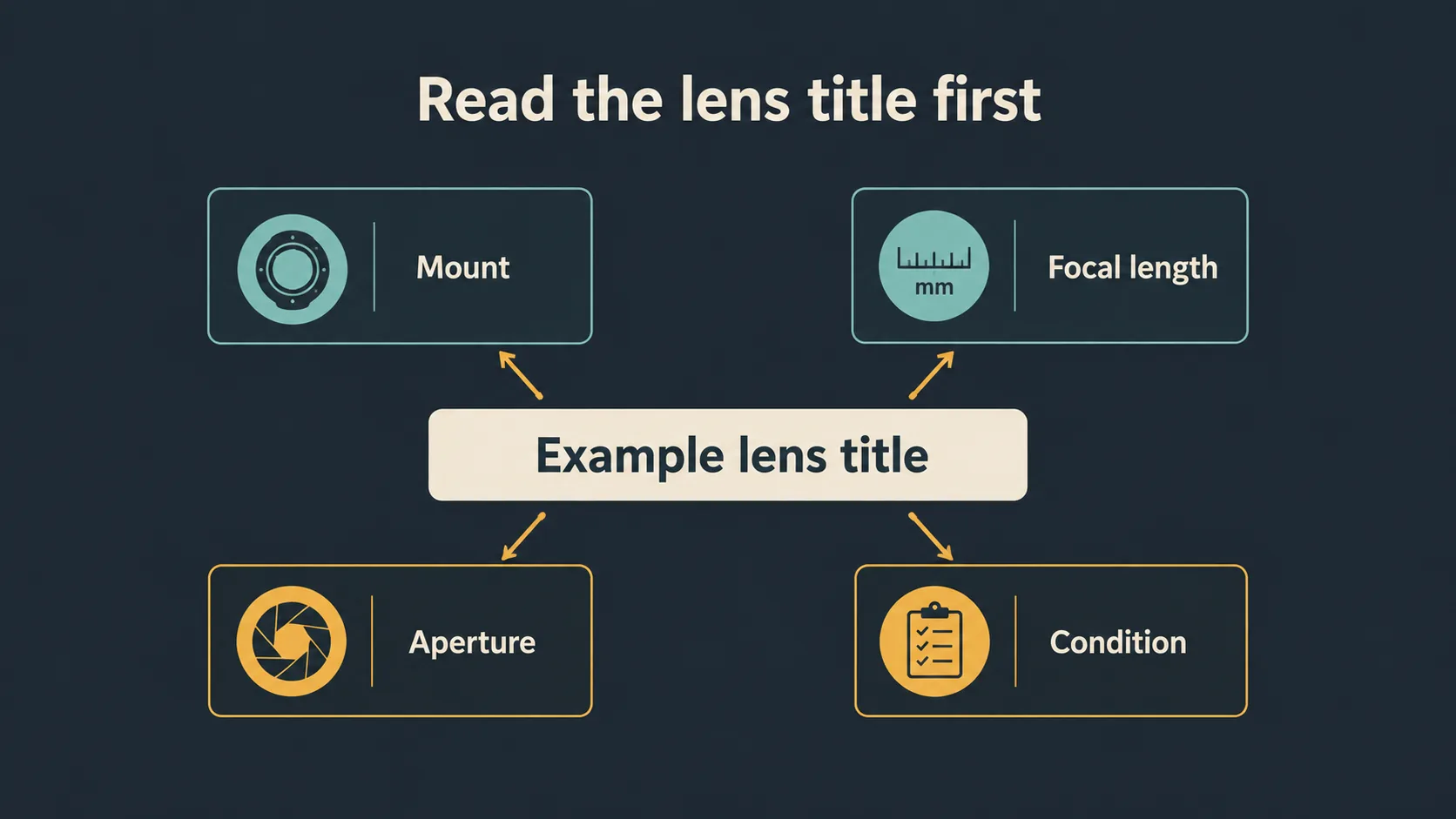
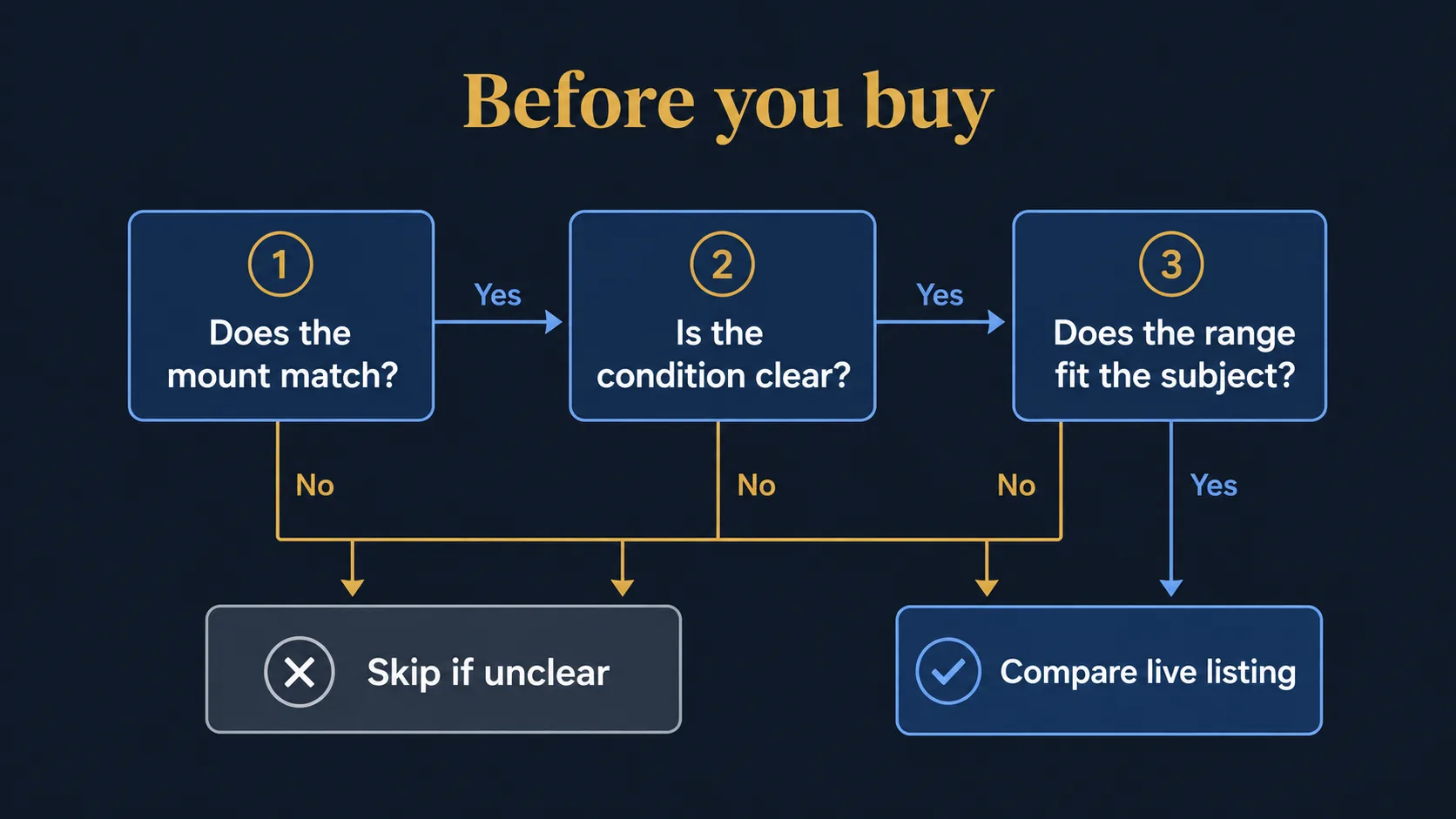
Mount. Start with Sony E, Canon, or Canon EF exactly as the title states. A strong sale is not useful if the lens is not listed for the camera system.
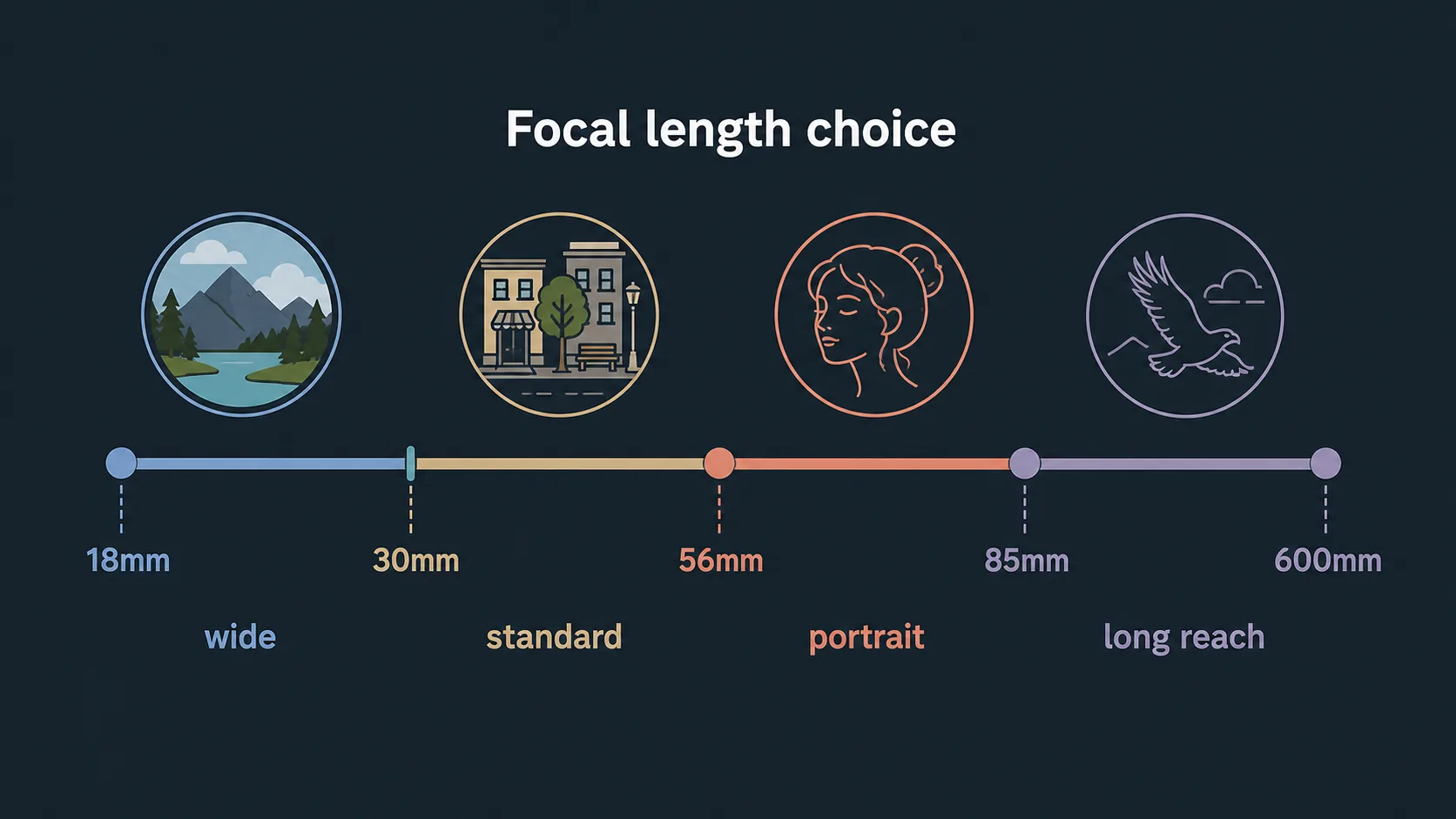
Focal range. Match the numbers to the job. 18-250mm favours convenience, 150-600mm favours distance, and 24-70mm or 28-70mm suits general standard zoom work.
Aperture. Read F1.4, F1.8, F2.8, or variable markings carefully. Wider numbers can support low-light use and blur, while variable telephoto titles prioritise reach.
Condition. Renewed is not the same buying decision as new. Check seller terms, condition notes, return options, and what is included before treating it as a direct match.
Line name. Art and Contemporary are product line terms, not automatic proof that one lens fits every buyer. Use them after mount, range, and aperture are already right.
Listing detail. Product titles do not always state weight, accessories, sealing, or filter size. Open the live listing and manufacturer page before deciding between close alternatives.
Worth reading before you commit: Sigma official lens catalogue, Sigma support information.
Where shoppers go wrong
A common slip. Buying by discount label before checking the mount. Sony E, Canon, and Canon EF wording must match the camera plan before any saving matters.
A common slip. Comparing a renewed lens directly with a new lens without reading condition notes. The purchase includes seller terms, packaging details, and return handling.
A common slip. Treating focal length as a quality score. A 600mm zoom is not better than an 85mm prime; it simply solves a different shooting problem.
A common slip. Assuming every Sigma line term means the same build or use case. Art, Contemporary, DG, DC, DN, OS, and HSM need specific confirmation.
A common slip. Ignoring the wide end of a zoom. A 24-70mm title and a 28-70mm title overlap, but the wider starting point can matter indoors.
A common slip. Forgetting that a prime has no zoom. A 30mm, 56mm, or 85mm lens can be excellent, but only if that fixed view suits the buyer.
What goes into the picks
We do not physically test these products, and we say so rather than implying otherwise.
We start from what is actually listed and in stock on Amazon in this category, and remove anything out of stock or without a live price. For this page that left 8 products.
We then read each manufacturer specification and separate the standardised figures from the marketing ones. Where a figure is the manufacturer’s own claim, we say so.
Where two products look similar on paper, we say so instead of manufacturing a difference. A page that pretends every product has a clear winner is not much use.
We also drop products that are listed but unavailable. A recommendation you cannot act on wastes your time, and stock in this category turns over quickly through November.
Nothing on this page is an independent measurement, and we do not present it as one. Where a number comes from the manufacturer, we attribute it to the manufacturer.
Our verdict
The top pick is the Sigma 24-70mm F2.8 DG DN Art for Sony E, because its title combines a standard zoom range, F2.8, Sony E fit, and Art wording.
The Sigma 30mm F1.4 Contemporary DC DN suits Sony E buyers who want a fast fixed lens rather than zoom coverage. It is the simpler prime choice for a normal-style view.
The Sigma 18-250mm renewed Canon lens suits buyers who prize one-lens range and accept renewed-condition checks. Its broad span matters more than speed or Art branding.
The Sigma 18-35mm F1.8 Art for Canon suits aperture-focused users who work in wide-to-normal framing. It is the most distinctive short zoom by aperture wording.
The Sigma 150-600mm Contemporary for Canon suits distant subjects above all. Its title is less about everyday convenience and more about reaching far beyond the other lenses here.
The Sigma 85mm f/1.4 Art for Canon EF and Sigma 56mm Sony E prime suit portrait-leaning buyers. Choose by mount, focal length, and whether the title states every spec you need.
Worth reading before you commit: FTC online shopping advice, FTC refunds and returns guidance.
Before you buy: your questions
What is the best Sigma lens Black Friday deal to check first?
Check the Sigma 24-70mm F2.8 DG DN Art for Sony E first if you want a flexible Sony E standard zoom. Canon users should start with Canon-listed options instead.
Do Sigma lens deals fit every camera mount?
No. Match the mount in the title exactly, such as Sony E, Canon, or Canon EF. A sale is not useful if the lens is not listed for your camera system.
Is the Sigma 24-70mm or 28-70mm better for Sony E?
The 24-70mm title starts wider and includes Art wording. The 28-70mm title still offers F2.8 and Sony E. Choose by focal range, line wording, and live listing details.
Which Sigma lens here is best for portraits?
The Sigma 85mm f/1.4 DG HSM Art for Canon EF is the clearest portrait-style Canon prime. Sony E buyers may compare the 56mm fixed prime instead.
Which Sigma lens here has the longest reach?
The Sigma 150-600mm Contemporary DG OS HSM for Canon has the longest listed focal range here. It is the obvious reach-focused option in this group.
Should I buy a renewed Sigma lens?
A renewed Sigma lens can make sense if the condition notes, included items, seller terms, and return option work for you. Read those details before comparing it with new listings.
What does F1.4 or F2.8 mean on a Sigma lens title?
The F number is the aperture marking in the title. Lower numbers such as F1.4 or F1.8 indicate a wider listed aperture than F2.8 or variable aperture titles.
Are Art lenses always the best Sigma choice?
No. Art wording identifies a Sigma line, but the right lens still depends on mount, focal length, aperture, condition, and the subject you plan to photograph.
Which Sigma lens is best for travel?
For Canon travel convenience, the 18-250mm renewed title offers the broadest all-in-one range. For Sony E, the 24-70mm and 28-70mm zooms are the main travel-style options.
Can I use a Sony E Sigma lens on Canon?
Do not assume that. The title must match the camera mount, and adapter use needs separate confirmation from reliable compatibility information.
How do I compare Sigma lens sale listings safely?
Compare exact titles, mount, focal range, aperture, condition, and included items. Use the live listing for current price and seller terms before checkout.
More camera and optics deals this Black Friday
Comparing options before the sale? These guides cover the same Black Friday and Cyber Monday window:
- Camera Black Friday guide: what actually gets discounted
- Manfrotto Black Friday deals
- Lume Cube Black Friday deals
- Lightbox Black Friday deals
- Leica Q2 Black Friday deals
- Photo Prints Black Friday deals
- When Black Friday Starts?
- Where to Find the Best Black Friday Deals
Black Friday Deals Store is a participant in the Amazon Services LLC Associates Program. We earn a commission from qualifying purchases made through links on this page, at no additional cost to you.
Prices and availability are shown by Amazon at the time you click, and change frequently. Earning a commission does not change which products we cover or what we say about them.

